Oops! Something went wrong while submitting the form.
X
The Ultimate Guide to 4130 Steel Machining: Expert Tips for Precision
Learn expert tips for machining 4130 steel with precision. This guide covers techniques and best practices to ensure optimal results in your machining projects.
Your one-stop metals shop offering value-added services on time!
Thank you! Your submission has been received!
Oops! Something went wrong while submitting the form.
Trusted by 100+ Growth Leaders.
Machining 4130 steel often feels like a constant battle against heat. While its high strength and toughness make it the "gold standard" for critical aerospace and automotive parts, those same properties are exactly what destroy tools and warp parts.
For the manufacturing team, the problem isn't just a dull drill bit; it's the residual stress that builds up during a cut, causing a precision component to shift out of tolerance at the last second. For procurement, this translates to unpredictable lead times and high scrap costs. Success with 4130 requires more than just a sharp tool; it requires a strategy for thermal management and consistent material sourcing.
This guide breaks down the essential cutting parameters, tooling choices, and setup techniques needed to turn 4130 from a "difficult" alloy into a predictable, high-performance asset.
Quick Recap
4130 Steel Offers Strength and Versatility: Ideal for aerospace, automotive, and military applications, 4130 provides a strong yet lightweight solution for high-performance parts.
Effective Machining Techniques: Use sharp tools, low speeds, and high feed rates to manage heat and extend tool life.
Heat Treatment Impacts Machinability: Annealed 4130 is easier to machine, while heat-treated 4130 requires slower speeds and specialized tools.
Coolant Flow is Crucial: Consistent coolant use prevents heat buildup, ensuring better tool life and part quality.
Precision Tools and Settings: Carbide or cobalt tools, paired with the right cutting parameters, are key to achieving precise machining results.
Why 4130 Steel is Essential for High-Performance Machining?
4130 steel, widely known as Chromoly, is a chromium-molybdenum alloy that bridges the gap between basic carbon steels and expensive superalloys. It is the backbone of the aerospace and defense industries because it offers high strength, exceptional toughness, and a weight-saving profile.
For engineers, the value of 4130 lies in its hardenability. Unlike standard steels, 4130 responds beautifully to heat treatment, allowing you to machine the part in a softer state and then harden it to withstand extreme fatigue.
This unique balance makes it a non-negotiable choice for mission-critical parts, including:
Aerospace: Landing gear assemblies, engine mounts, and airframe structural brackets.
Defense: Firearm receivers, high-pressure hydraulic cylinders, and specialized fasteners.
Automotive/Racing: Roll cages, suspension linkages, and drive shafts.
In the machine shop, 4130 stands out for its integrity at higher temperatures. While other steels might soften or deform under the heat of a heavy cut, 4130 stays stable, ensuring the final part meets the rigorous safety standards required for flight and combat.
Now that we know what 4130 steel is, let’s explore its key machinability characteristics to understand how to work with it effectively.
Machinability Fundamentals of 4130
The performance of 4130 steel is a direct result of its refining process. Unlike standard carbon steels, 4130 undergoes precise alloying in an electric furnace to ensure the chromium and molybdenum are evenly distributed. This "homogeneity" is what allows a machinist to achieve a consistent surface finish across a large production run.
Chemical Composition of 4130 Steel
Element
Percentage
Iron
97.03%–98.22%
Chromium
0.8%–1.1%
Manganese
0.4%–0.6%
Carbon
0.28%–0.33%
Silicon
0.15%–0.35%
Molybdenum
0.15%–0.25%
Sulfur
< 0.04%
Phosphorus
< 0.035%
Carbon Content and Impact on Machinability
The carbon content in 4130 steel (0.28%–0.33%) places it in the low-carbon steel category, providing a good balance of strength, ductility, and weldability. While not as hard as high-carbon steels, it still offers an excellent machinability rating of 70% (when annealed), with a low wear rate on tools and good cutting performance.
The primary challenge isn't the hardness; it's the ductility. If the material is too soft (annealed), it can become "gummy," leading to long, stringy chips that wrap around the spindle. If it is heat-treated, the hardness increases, requiring a shift toward more robust, coated carbide tooling.
Key Properties of 4130 Steel
Property
Value
Density
0.284 lb/in³
Yield Strength
63,100 psi
Hardness
92 Rockwell
Magnetism
Ferrous magnetic
Recommended Cutting Speeds
Carbide tooling is recommended for cutting to improve efficiency and reduce tool wear.
Milling: 520–710 SFM (Surface Feet per Minute)
Turning: 840–1,150 SFM
Due to its balanced composition and machinability, 4130 steel is a reliable choice for manufacturers looking to produce high-performance parts with consistent quality and efficiency.
Understanding the basics of 4130’s machinability helps us determine the best forms and configurations for your specific needs.
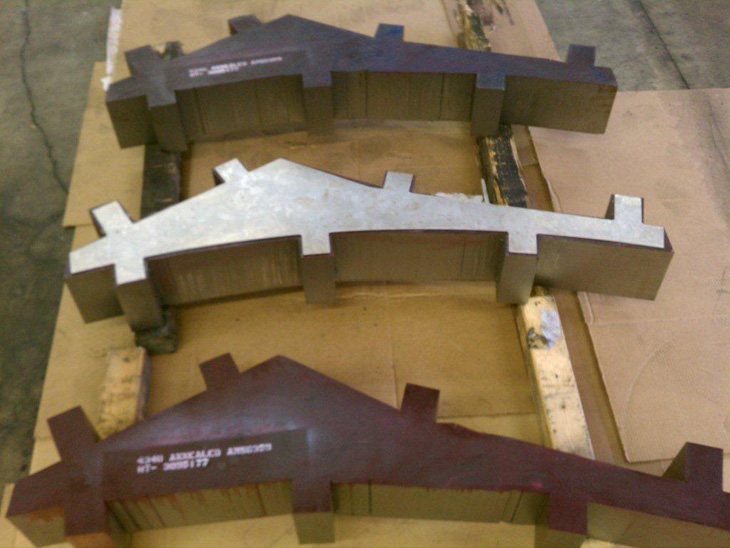
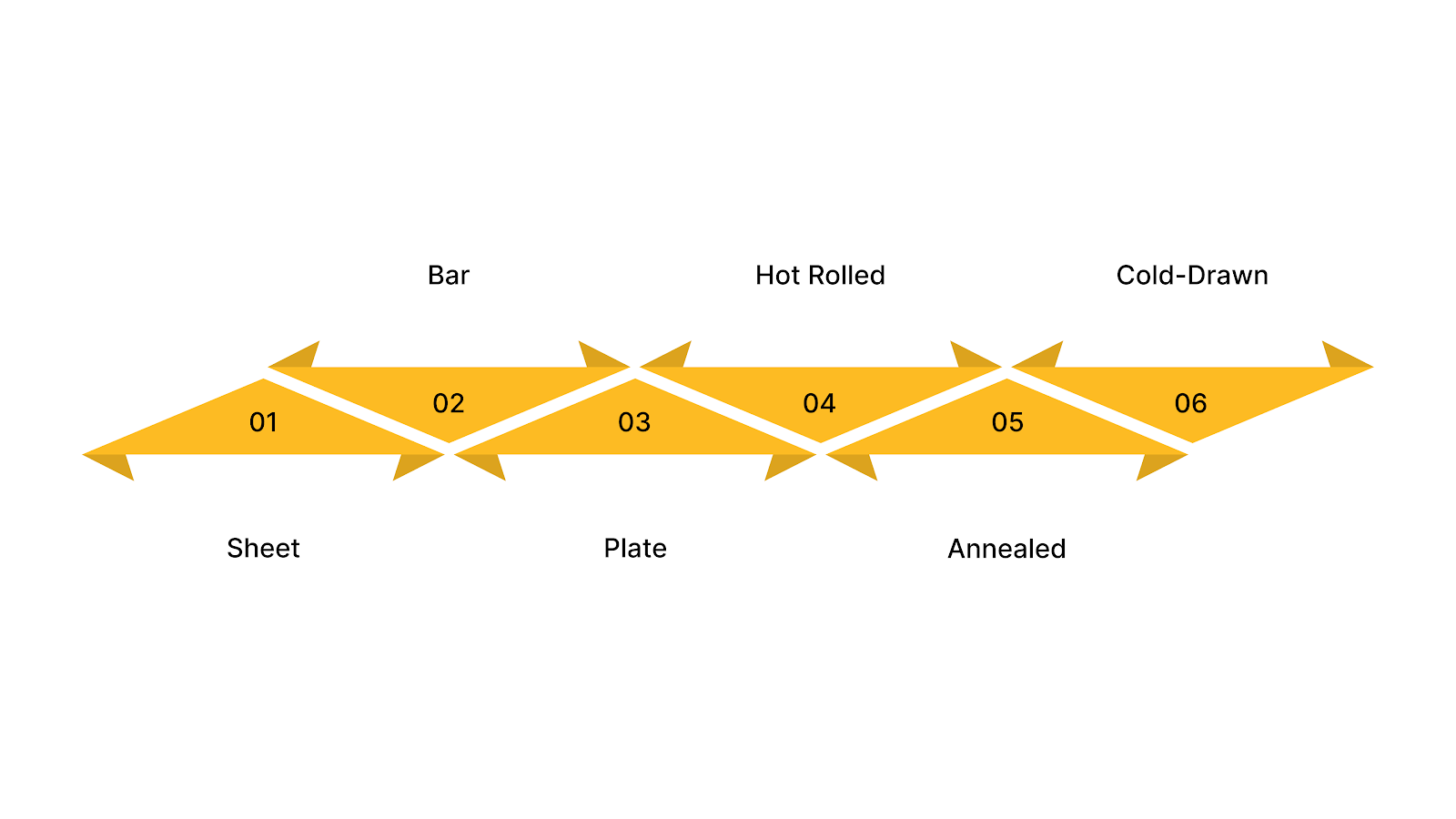
Selecting the Optimal 4130 Form for Production Efficiency
Choosing the right form of 4130 steel is one of the earliest decisions that affects machining stability, cycle time, and scrap risk. While the alloy chemistry remains the same, each form's processing history determines how the material behaves once it enters the machine.
Sheet: Thin 4130 sheet is commonly used for formed structures such as bulkheads and enclosures. Machining is usually minimal, but distortion during cutting or welding can become an issue if residual stresses are not well controlled.
Bar: Round or rectangular bars are used when parts require significant material removal and tight tolerances. Cold-drawn bars offer better dimensional consistency, but they also carry higher residual stress that must be managed during machining.
Plate: A thicker plate is chosen for load-bearing components where strength and stiffness dominate. Machining plate often requires stress relief to prevent movement as material is removed.
Hot Rolled: Hot rolling produces a tougher, less uniform structure. It machines more forgivingly in roughing operations but usually requires additional finishing to achieve tight tolerances.
Annealed: Annealed 4130 reduces hardness and internal stress, making it a common choice for parts with deep cuts, complex features, or tight flatness requirements.
Cold-Drawn: Cold drawing enhances strength and dimensional accuracy but increases the risk of part movement during machining. It performs best when paired with controlled cutting parameters and staged machining. Each of these forms offers distinct strengths, making them suitable for a range of applications, from lightweight components to high-strength structural parts.
Once we’ve covered the forms of 4130 steel, let’s look at why machining 4130 offers distinct advantages across various industries.
Why Machining 4130 Steel is the Strategic Choice for High-Performance Parts?
4130 steel is a popular choice among manufacturers because it provides the rugged durability of a high-strength alloy without the nightmare of a "difficult-to-machine" superalloy. When you optimize your setup for this material, you gain a predictable, high-speed path to producing parts that simply do not fail under pressure.
High Strength-to-Weight Ratio: 4130 delivers excellent strength without adding excessive weight, making it ideal for parts that require both strength and lightness.
Fatigue and Impact Resistance: It performs well under repetitive stress and impact, ensuring durability in demanding conditions.
Good Weldability: This steel welds easily, making it versatile for a wide range of manufacturing processes.
Toughness at High Temperatures: It maintains strength and toughness even at higher temperatures, critical for high-heat applications.
Superior Wear Resistance: 4130 offers strong wear resistance, ensuring longer tool life and reducing maintenance requirements.
Ideal for High-Stress Applications: It's designed to withstand heavy loads and harsh conditions, making it suitable for parts such as gears and shafts.
Good Machinability: With the right tools and settings, machining 4130 can be efficient and precise.
Cost-Effective: Compared to higher-strength alloys like 4140, 4130 offers a balance of strength and cost, making it an economical choice for many projects.
Versatile Across Industries: It's widely used in aerospace, automotive, and military applications, demonstrating its adaptability.
Compared to 1018 steel, 4130 offers significantly higher strength and wear resistance, making it a better fit for high-stress environments. However, it is harder to machine than 1018 due to its increased hardness.
In comparison to 4140 steel, 4130 is easier to machine, making it a preferred choice in many shops. While 4140 offers better wear resistance and hardness due to its higher carbon content, 4130 strikes the right balance: it’s tough yet not overly difficult to machine, which makes it a go-to for many manufacturers.
Aero-Vac Alloys & Forge provides high-quality, certified4130 alloy steel, with AS9100D/ISO 9001 certifications ensuring full traceability and compliance. We offer fast lead times (2–4 weeks for custom orders) and value-added services like saw cutting, forging, and heat treating to streamline your machining processes.
With the benefits clear, it's important to understand the common use cases for 4130 steel, where these advantages are put to work.
Common Use Cases for 4130 Steel
4130 steel is the industry standard for components that must survive extreme stress, high-pressure cycles, and intense vibration. It is the go-to material when a project requires a guaranteed balance of lightweight design and structural backbone.
Aerospace Components: Used in critical parts like landing gear, brackets, and structural supports due to their high strength and ability to withstand harsh conditions.
Automotive Parts: Commonly found in chassis, roll cages, and suspension components, where strength and durability are necessary for safety and performance.
Military Equipment: Machined 4130 is essential for producing firearm parts, vehicle components, and military-grade hardware that must withstand extreme stress and pressure.
Racing Car Parts: Found in frames, drive shafts, and suspension arms, 4130 provides the balance of light weight and strength needed for high-performance racing.
Oil and Gas Equipment: Used for drill rigs, valves, and pipe fittings that require excellent resistance to fatigue and wear under extreme conditions.
Bicycle Frames and Parts: The material is also popular in bike frames, offering a combination of lightweight and high strength for both performance and durability.
Hydraulic Systems: Components like pistons, rods, and cylinders benefit from 4130’s resistance to wear and ability to withstand pressure cycles.
Industrial Machinery Components: 4130 is used in parts like gears, shafts, and couplings, where precision, strength, and wear resistance are critical for consistent performance.
Engine Components: Crankshafts and connecting rods are often made from 4130, as its ability to be heat-treated makes it ideal for high-stress, high-temperature environments.
The versatility of 4130 steel, combined with its machinability and heat-treatment options, makes it a go-to material in industries that require strength and high-performance parts.
Knowing how 4130 is used will help explain the challenges you may face when machining it.
What Are the Challenges in Machining 4130 Steel?
While 4130 is highly reliable once in service, it presents specific physical hurdles on the shop floor. Mastering this alloy requires a strategy that accounts for its thermal behavior and its tendency to change properties under the pressure of the tool.
Tool Wear: 4130 steel’s hardness causes rapid tool wear, requiring frequent tool changes. Using advanced coatings can help extend tool life.
Heat Generation: The material generates significant heat during machining, risking overheating of both the workpiece and cutting tools.
Work Hardening: 4130 tends to work-harden during machining, making it harder to cut as the process progresses, especially if conditions aren’t optimized.
Dimensional Accuracy: Achieving tight tolerances is difficult due to the material’s toughness, which can cause deformation under heat.
Surface Finish Quality: 4130 produces rough edges and burrs, making it difficult to maintain a smooth finish without additional finishing steps.
Chip Control: It forms long, stringy chips, making chip management and removal more challenging.
Understanding the challenges will help you choose the best cutting tools for the job, ensuring efficiency and precision.
What Cutting Tools Are Best for Machining 4130 Steel?
Choosing the right cutting tools is about managing the friction and heat that 4130 naturally generates. To maintain tight tolerances in a high-volume run, your tooling must provide a balance of "red hardness" (the ability to stay sharp while hot) and edge toughness:
Carbide Tools: Carbide is ideal for machining 4130 due to its hardness and wear resistance, and its ability to withstand high temperatures and heavy cutting stresses in heavy-duty operations.
High-Speed Steel (HSS): HSS tools are cost-effective for light machining. They wear faster than carbide but work well for less demanding tasks and smaller batches.
Cobalt Steel Tools: Offering better heat resistance than HSS, cobalt tools are a middle ground, performing well for tougher cuts without the expense of carbide.
Coating Options for Extended Tool Life
The right coating acts as a thermal barrier, keeping the heat in the chip and away from the tool substrate:
TiN (Titanium Nitride): TiN coatings reduce friction and improve wear resistance, extending the life of carbide tools during long runs in 4130 steel.
TiAlN (Titanium Aluminum Nitride): TiAlN is ideal for high-speed machining, offering superior thermal stability and reducing tool wear during heat-intensive cuts.
Diamond Coatings: For tough finishing tasks, diamond-coated tools offer exceptional hardness and abrasion resistance, increasing tool life under demanding conditions.
By choosing the right combination of tool material and coating, you can optimize performance and durability when machining 4130 steel.
Now that we know the best tools for the job, let’s explore the most effective machining techniques to maximize their performance.
What Are the Best Machining Techniques for 4130 Steel?
Success with 4130 depends on controlling the temperature at the tool tip. Because this alloy is prone to work-hardening, every technique must focus on "positive engagement," ensuring the tool is always cutting and never rubbing.
1. Turning
Use Sharp Tools: Employ sharp, high-quality carbide inserts to reduce cutting forces and avoid work hardening. Dull tools can lead to excessive heat and premature wear.
Low Speeds, High Feeds: 4130 steel can quickly generate heat, so use slower speeds combined with higher feed rates. This helps manage heat and reduces tool wear, keeping the machining process under control.
2. Milling
Climb Milling Over Conventional Milling: For 4130 steel, climb milling (down milling) is preferred. It reduces cutting forces, improves surface finish, and enhances tool life by forcing the cutter into the material.
Consistent Coolant Flow: Milling generates significant heat. Ensure a continuous coolant supply to prevent overheating, extend tool life, and improve cut quality.
3. Drilling
Use High-Quality Drill Bits: Opt for carbide or cobalt drill bits for their durability and heat resistance. Keep the bits sharp to minimize friction and tool wear.
Peck Drilling for Deeper Holes: Use the peck drilling method when drilling deeper holes. This reduces heat buildup and ensures efficient chip removal, improving hole quality.
4. Grinding
Diamond Grinding Wheels: For finishing 4130 steel, diamond or CBN (cubic boron nitride) grinding wheels are ideal. They handle the material's hardness and maintain a smooth finish.
Avoid Overheating: Grinding generates significant heat, so it’s crucial to use adequate coolant and minimize contact time to prevent heat damage and preserve the part’s integrity.
5. Heat Treatment Considerations
Pre-Heat Before Machining: If machining heat-treated parts, preheat the material to prevent cracking or warping from thermal expansion.
Slow Cooling: After machining and heat treatment, let the parts cool slowly. This prevents distortion and ensures dimensional stability for critical components.
6. Minimizing Heat Build-Up
Constant Coolant Flow: Maintain coolant flow throughout the machining process to regulate temperature, prevent work hardening, and improve tool life and part accuracy.
Optimize Toolpath Strategies: Adjust cutting speeds and feeds based on the material and tool geometry. This reduces heat buildup, improving both efficiency and surface finish.
By using these techniques, machining 4130 steel becomes more efficient, with improved tool life and higher precision, ensuring your components meet stringent performance standards.
We’ve covered the technical aspects; now it’s time to see how Aero-Vac can support your 4130 steel machining needs with quality and efficiency.
Aero-Vac Alloys & Forge: Your Trusted Partner for 4130 Steel Machining and Supply
When it comes to machining4130 steel for demanding industries like aerospace, automotive, and military, partnering with the right supplier can make all the difference. Here's howAero-Vac Alloys & Forge stands out in supporting your machining needs:
Certified, Traceable Materials: As an AS9100D and ISO 9001 certified supplier, we ensure that all materials, including 4130 steel, meet the highest standards and are fully traceable through mill test reports.
Fast Lead Times: Need custom 4130 steel shipped quickly? With 2-4 week lead times for custom orders and next-day shipment for in-stock materials, we help keep your production on track.
In-House Processing Services: From saw cutting and forging to heat treating and precision machining, our in-house services eliminate the need for multiple vendors, saving time and reducing risk.
Expert Support: Our team provides live technical support, real-time order tracking, and custom solutions, ensuring you receive the materials and processing services you need on time.
High-Performance Materials: We stock over 150 aerospace-grade alloys, including 4130, ready for your critical applications, ensuring that you always have access to the right materials for your project.
For OEMs needing high-quality, fast, and reliable steel solutions, Aero-Vac Alloys & Forge is the partner you can trust.
Conclusion
Machining 4130 steel presents unique challenges, but with the right strategies and tools, OEMs can achieve precision, durability, and cost efficiency. By selecting appropriate machining techniques, optimizing tool paths, and managing heat buildup, manufacturers can enhance the performance and lifespan of their 4130 steel components.
Aero-Vac Alloys & Forge is here to support you every step of the way. With certified, high-performance 4130 steel, fast lead times, and in-house value-added processing, we provide everything you need to ensure precision in your machining projects.
1. How can you prevent overheating when machining 4130 steel?
To prevent overheating, use high-quality coolant with consistent flow, and lower cutting speeds while increasing feed rates. Keep tools sharp and consider intermittent cutting or pecking to reduce heat buildup.
2. How can you improve surface finish when machining 4130 steel?
Improve surface finish by using fine-toothed tools, maintaining consistent coolant flow, and optimizing feed rates. Ensure sharp tools and consider a light finishing pass. Post-machining processes, such as polishing, can further enhance quality.
3. How does heat treatment affect 4130 steel machining?
Heat treatment affects machinability: annealed 4130 becomes softer and easier to machine, while quenched and tempered 4130 becomes harder and more challenging to machine. Specialized tools and slower cutting speeds are necessary for harder steel.
4. What are the thermal properties of 4130 carbon steel?
4130 steel has a melting point of 2,610°F, thermal conductivity of 296 BTU-in/hr-ft²-°F, and a specific heat capacity of 0.114 BTU/lb-°F. It has a thermal expansion rate of 6.2 * 10⁻⁶ in/in/°F.
5. What tools are best for machining 4130 steel?
For machining 4130 steel, carbide or cobalt tools are recommended, especially when the steel is heat-treated. These tools handle hardness and wear better, ensuring longer tool life and greater precision in machining.
Related articles
8 min read
How Stainless Steel Products Are Manufactured: A Detailed Process Guide
Learn how stainless steel products are manufactured, from raw materials and melting to forming, finishing, and quality checks used in industrial applications.
Steel Fabrication Quality Control: What Top Manufacturers Get Right
Learn how steel fabrication quality control works, from inspections and testing to traceability and process checks that reduce rework, delays, compliance risk.
Alloy Quality Control: How to Ensure Consistent Metal Performance
Learn the importance of alloy quality control in ensuring consistent metal performance. Discover techniques for maintaining alloy integrity in manufacturing.