Schedule a Call
Ready to Upgrade Your Process Operations?
Ready to Upgrade Your Process Operations?
Learn how to select the right alloys for corrosive chemical processing environments, including factors like material durability, corrosion resistance, and cost.
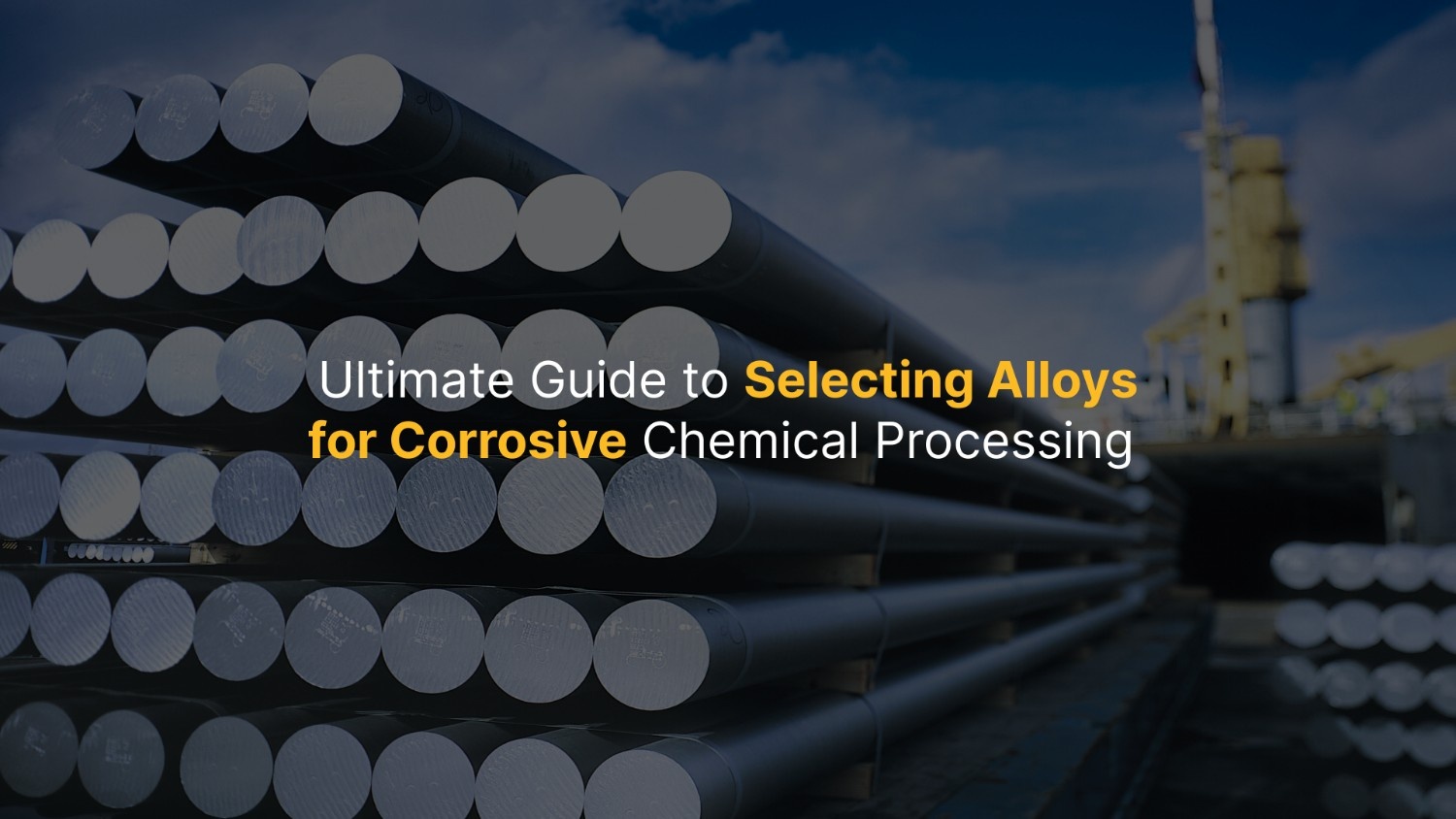
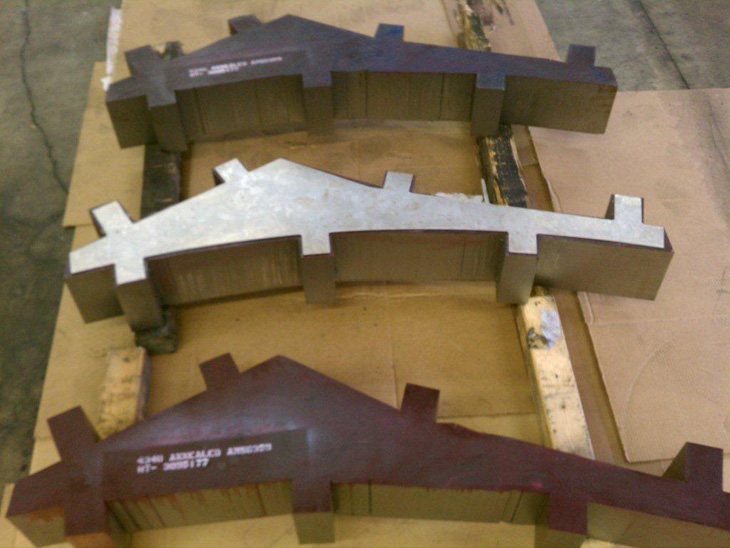
In the aerospace and defense sectors, selecting the right alloys for corrosive chemical processing environments is a critical decision that can determine the success or failure of an operation. As a Procurement Manager or Manufacturing Engineer, you're under constant pressure to secure materials that meet stringent quality standards while minimizing lead times and costs.
Poor alloy selection leads to material degradation, unplanned maintenance, and production delays that could compromise both safety and performance.
This blog will walk you through the pain points of alloy selection, helping you manage the complexities of corrosion resistance and cost-effectiveness in mission-critical applications.
Corrosion is one of the most significant challenges in chemical processing. Its effects are often subtle at first, but without proper attention to material selection, it can cause catastrophic failure. Here’s a closer look at how corrosion works and why selecting the right alloy is critical:
In chemical processing, where reliability is key, overlooking these critical corrosion factors can lead to increased downtime, unplanned maintenance, and catastrophic failures.
Also Read: Aircraft Alloys: Properties, Types, and Aerospace Engineering Insights
With corrosion in mind, let’s break down the key properties that make certain alloys more suited to handling these challenges.
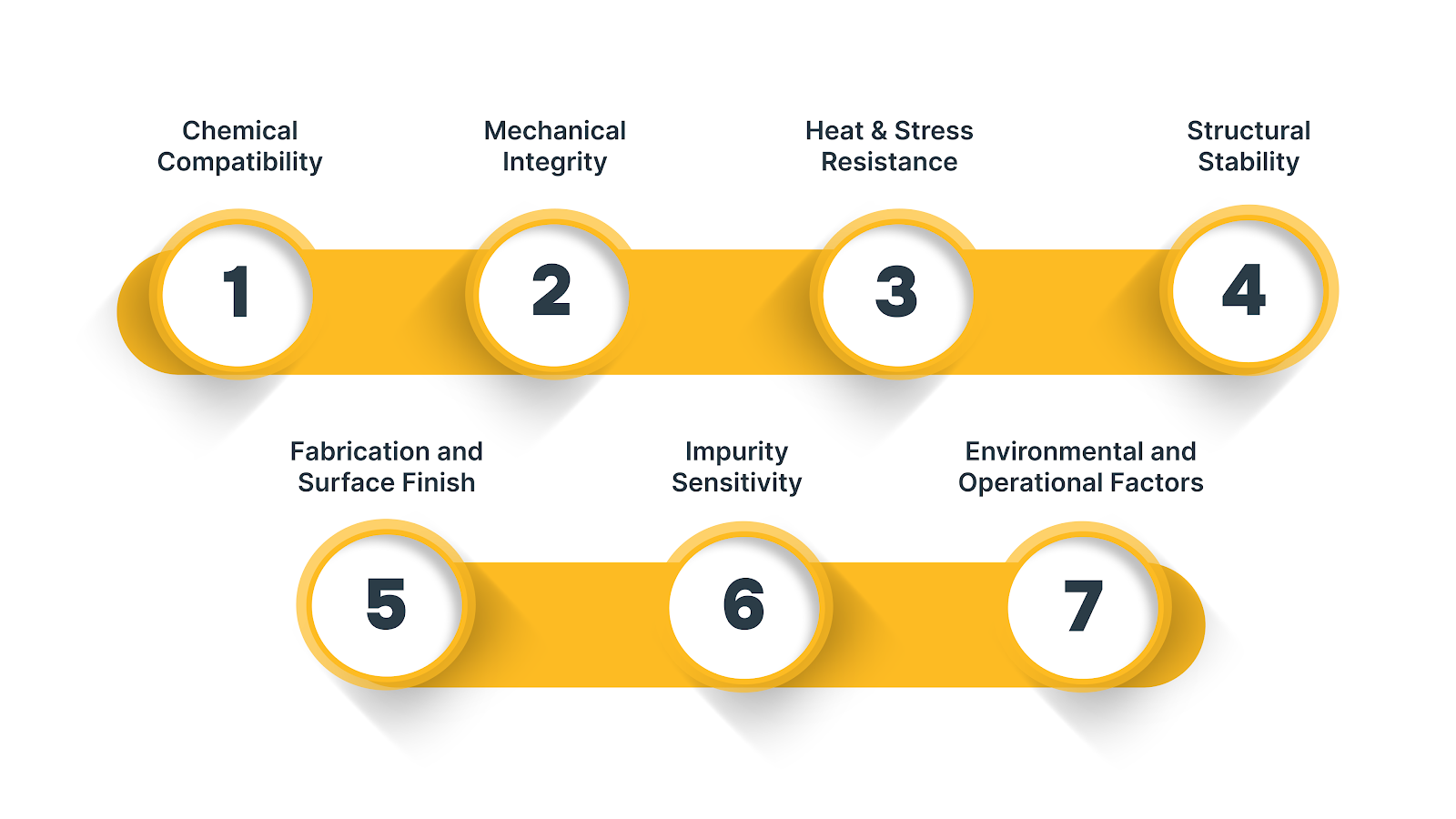
In corrosive chemical environments, selecting the right alloy involves understanding how different properties interact with the environment to ensure long-term performance. Here’s a breakdown of the key properties that matter when evaluating alloys for chemical processing:
Alloying elements like nickel, molybdenum, chromium, and copper enhance corrosion resistance, protecting materials from aggressive chemical environments. These elements help prevent oxidation, pitting, and crevice corrosion, particularly in acidic and chloride-rich solutions.
In a corrosive environment, mechanical properties like tensile strength, fatigue resistance, and fracture toughness are critical. Alloys need to withstand pressure, thermal cycling, and dynamic loads without compromising performance or breaking down due to material degradation.
Superalloys such as Inconel and Hastelloy are designed to retain their strength at elevated temperatures. These materials resist creep (deformation under long-term stress) and embrittlement at high temperatures, ensuring reliable performance in processes involving heat and corrosive chemicals.
Stress-corrosion cracking (SCC) is a major concern in corrosive environments, particularly under conditions of high stress and fluctuating temperatures. The alloy’s ability to resist SCC and fatigue is critical.
The fabrication method (machining, welding, cold working) impacts the material’s corrosion resistance. For example, alloys that undergo cold working to increase strength may become more susceptible to stress-corrosion cracking. The surface finish also matters; smooth, polished surfaces often perform better by reducing the sites where corrosion can initiate.
Even trace impurities in the corrosive medium can drastically affect corrosion rates. Chlorides often accelerate corrosion, but some elements may actually mitigate it. Materials should be selected with the potential for contaminants in mind, especially in systems that involve impurities such as sulfur or phosphorus.
Beyond alloy composition, the service environment plays a significant role in corrosion resistance. Solution pH, temperature, and fluid velocity can affect how an alloy reacts. Alloys must be selected to handle varying conditions, such as aggressive solutions, high temperatures, or high-pressure systems, while maintaining performance under prolonged exposure.
By understanding these key properties, procurement teams can make informed decisions and select alloys that meet the mechanical and chemical demands of the application.
To help with alloy selection, here’s an overview of the materials that stand out in corrosive environments.
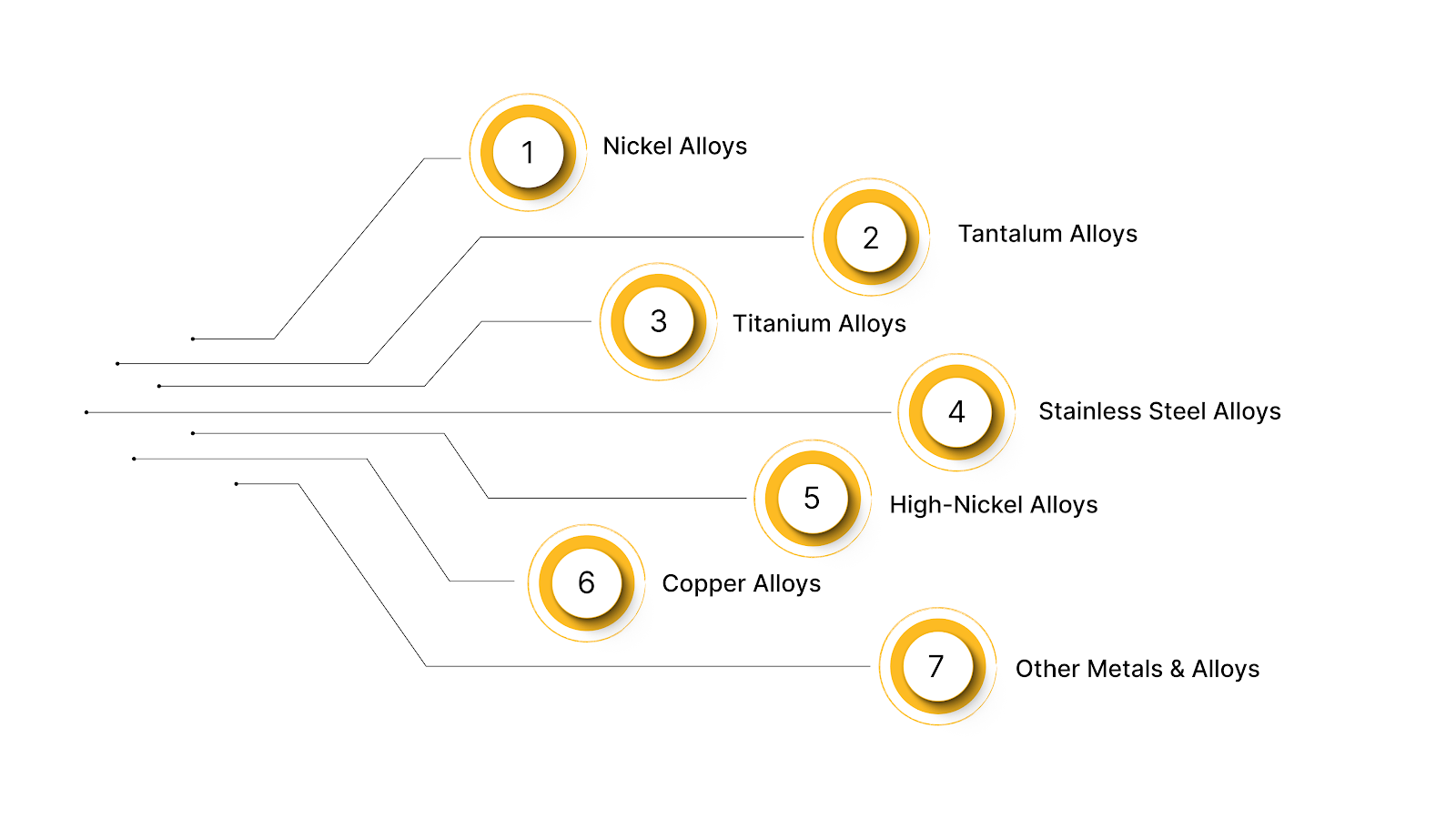
In corrosive chemical processing environments, selecting the right alloy is crucial to ensure long-term performance, reliability, and cost-effectiveness. Below is an overview of the most commonly used alloys, each selected for its unique properties that meet the demanding needs of chemical processing industries.
Nickel alloys are widely recognized for their outstanding corrosion resistance and strength, particularly in harsh chemical environments. These alloys perform exceptionally well in applications involving acids, alkalis, and high temperatures.
Key Applications:
Key Benefits:
Tantalum is known for its extreme corrosion resistance, especially in highly acidic environments such as sulfuric and hydrochloric acids. It is highly pure, making it ideal for applications that require contamination prevention.
Key Applications:
Key Benefits:
Titanium alloys, especially Grade 2 and Grade 5, are widely used for their high corrosion resistance, strength, and low weight. These alloys are ideal for applications where both lightness and strength are essential.
Key Applications:
Key Benefits:
Stainless steels like 304SS and 316SS offer excellent corrosion resistance but vary in their alloy content. 316SS is particularly effective in environments containing chlorides, offering superior resistance compared to 304SS.
Key Applications:
Key Benefits:
High-nickel alloys, such as Hastelloy C276, offer superior corrosion resistance, especially in acidic and harsh chemical-processing environments. These alloys are used when stainless steel is insufficient, especially in extreme conditions.
Key Applications:
Key Benefits:
Copper alloys, specifically C11000, are widely used in surface finishing applications due to their excellent thermal and electrical conductivity. However, copper is generally not recommended for aggressive acids or caustic environments without protective measures.
Key Applications:
Key Benefits:
Other metals, including zirconium and niobium, offer excellent corrosion resistance in highly aggressive chemical environments.
Key Applications:
Key Benefits:
These alloys are selected based on the specific needs of chemical processing operations, whether that’s resistance to extreme heat or the ability to prevent contamination.
Are you selecting the right alloys to withstand the harsh conditions of corrosive chemical processing? Aero-Vac Alloys & Forge is your trusted partner for high-performance alloys, including nickel, titanium, and stainless-steel alloys, ensuring superior corrosion resistance for your most demanding applications. With our AS9100/ISO certified services, we deliver certified, traceable materials with fast, reliable processing to reduce your operational risk and lead times.
With these alloys in mind, let’s walk through a step-by-step guide to selecting the right material for your specific needs.
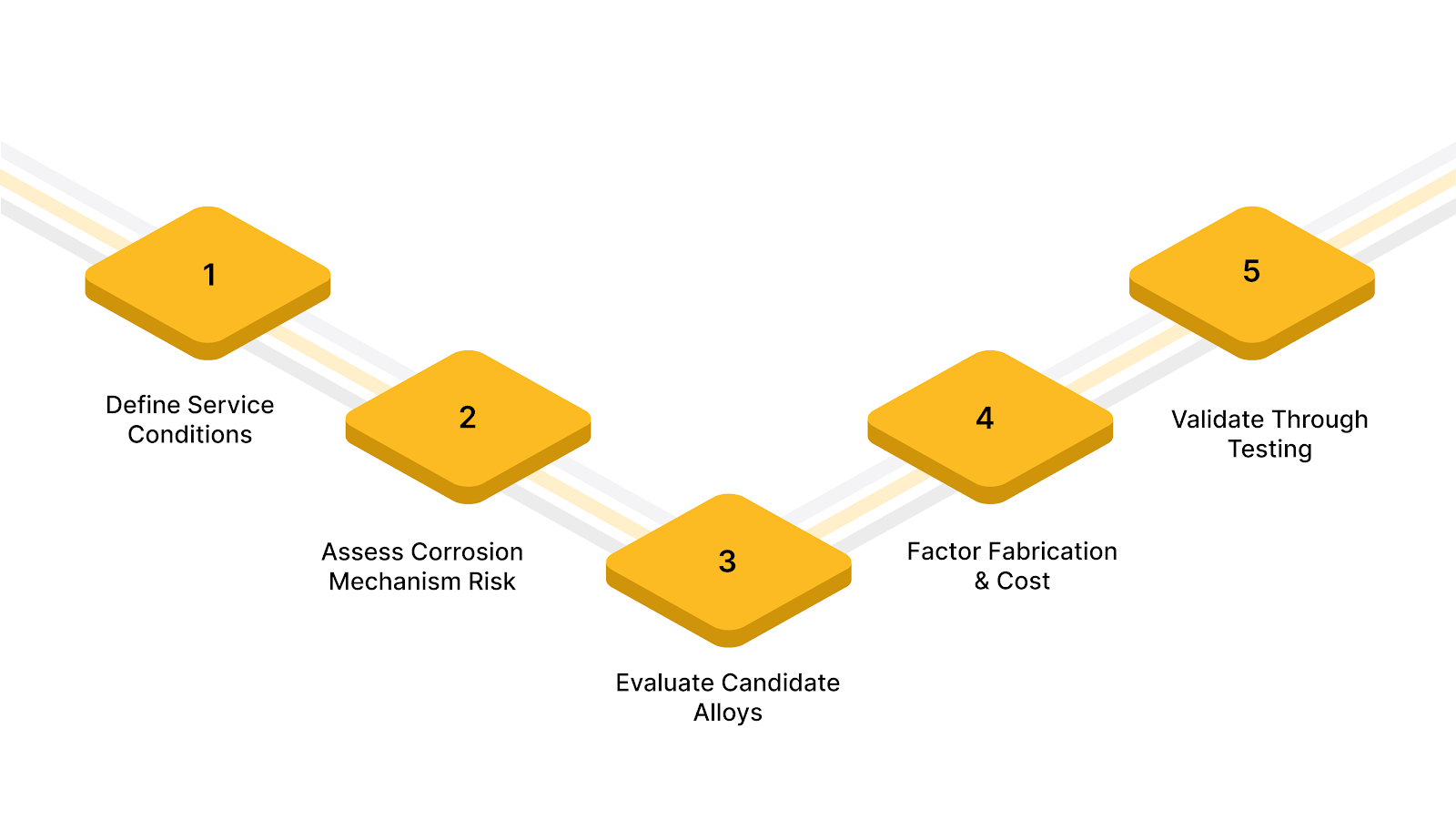
Selecting the right alloy for a corrosive chemical processing environment requires a structured approach. Here’s a step-by-step method that engineers can use to make informed material choices while minimizing risk and ensuring performance:
1. Define Service Conditions
Start by identifying the critical operating conditions: fluid chemistry, temperature, and pressure. This helps determine how aggressive the environment will be and what types of corrosion could be a concern.
2. Assess Corrosion Mechanism Risk
3. Evaluate Candidate Alloys
Choose alloys that offer a balance between corrosion resistance, mechanical strength, and weldability. Consider performance under stress, thermal cycling, and exposure to reactive chemicals.
4. Factor Fabrication & Cost
Include factors like machinability, availability, and life-cycle costs. Don’t just focus on initial material costs; consider long-term maintenance, replacement, and operational efficiency.
5. Validate Through Testing
Always validate the chosen alloy with real-world testing. Subject the material to conditions similar to the expected operational environment to ensure it can withstand the expected stresses without failure.
By following this systematic selection process, engineers can confidently choose alloys that will meet the rigorous demands of corrosive chemical processing environments.
Also Read: Alloy Forge Explained: Proven Techniques & Applications in 2026
If you’re ready to choose the right materials, it’s important to work with a trusted supplier that delivers quality, speed, and reliability. Here’s how we can help.
At Aero-Vac Alloys & Forge, we provide the critical alloys and services needed to excel in corrosive chemical-processing environments, especially in industries such as aerospace, defense, and medical manufacturing. Here's why we are the preferred partner:
For corrosive chemical processing environments, trust Aero-Vac Alloys & Forge to provide the right materials that minimize risk and boost operational efficiency.
Selecting the right alloy for corrosive chemical-processing environments is a crucial decision that impacts the longevity, reliability, and safety of your equipment. With the right materials, you can significantly reduce the risks of failure, downtime, and costly repairs.
At Aero-Vac Alloys & Forge, we specialize in providing high-performance alloys and value-added services tailored to the needs of various industries. Our AS9100D/ISO 9001-certified alloys, fast delivery times, and custom fabrication services ensure you get the materials you need when you need them.
Contact Aero-Vac Alloys & Forge now to get started on your next project and experience the difference our expertise and commitment to quality can make.
1. What alloys are best for corrosive chemical processing environments?
Alloys like nickel-based alloys (Inconel, Hastelloy), titanium, and super-austenitic stainless steels are highly recommended for their superior resistance to corrosion and heat, making them ideal for harsh chemical environments.
2. How do I choose the right alloy for my specific application?
Start by evaluating service conditions like fluid chemistry, temperature, and pressure. Then, consider the corrosion mechanisms at play and select alloys with the required resistance and mechanical strength.
3. What are value-added services, and how do they benefit me?
Value-added services like precision cutting, heat treating, and machining provide near-net-shape parts, saving you time and reducing costs in post-processing while ensuring materials are ready for final assembly.
4. Why is material traceability important in chemical processing?
Traceability ensures that each batch of material meets AMS, BMS, and MIL-STD specifications. This is vital for compliance and ensures the materials perform as expected, minimizing risk in high-stakes environments.