Schedule a Call
Ready to Upgrade Your Process Operations?
Ready to Upgrade Your Process Operations?
Know how alloy forge works with certified techniques, process controls, and applications that aerospace and defense buyers rely on to reduce risk, and more.
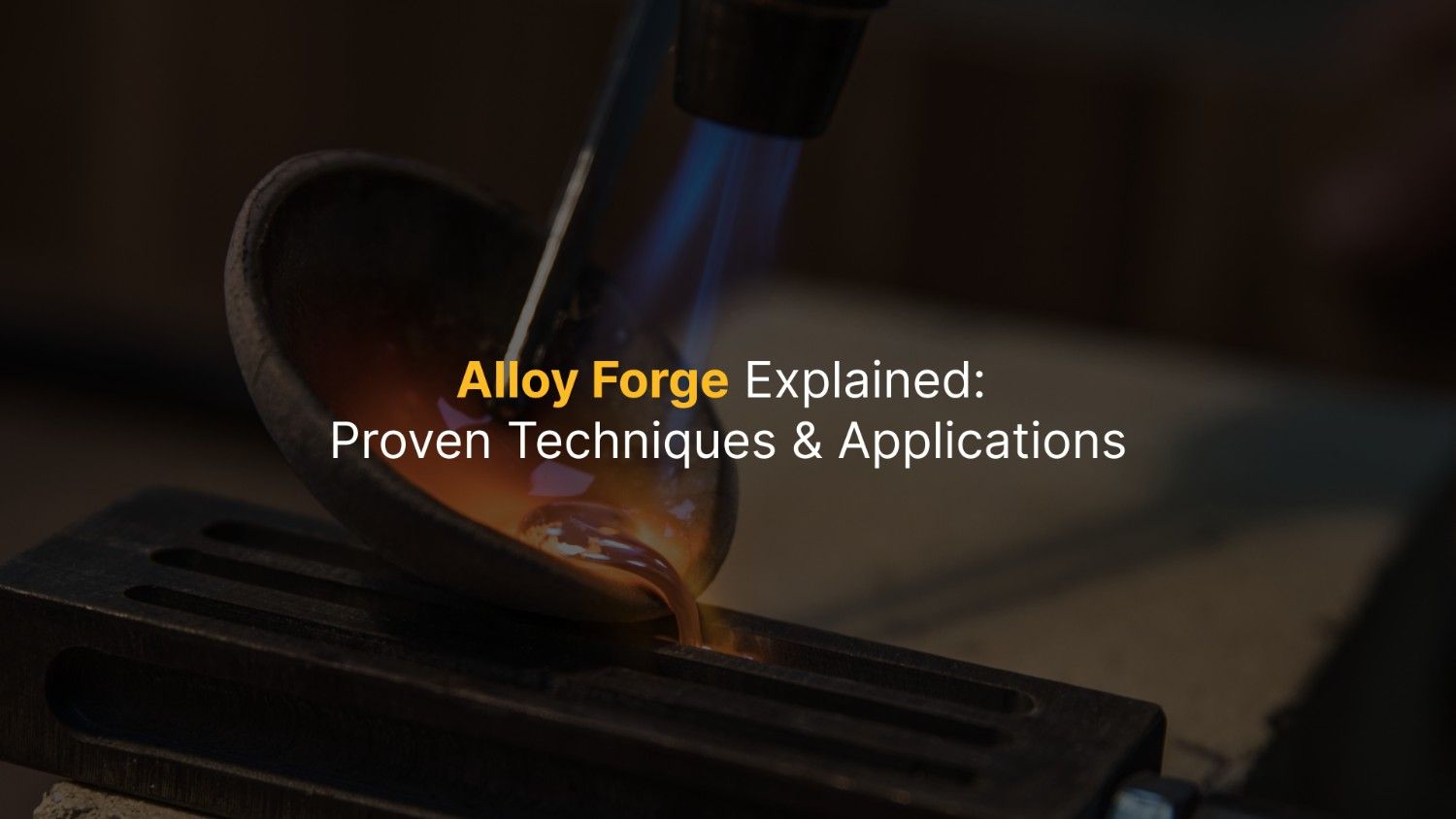
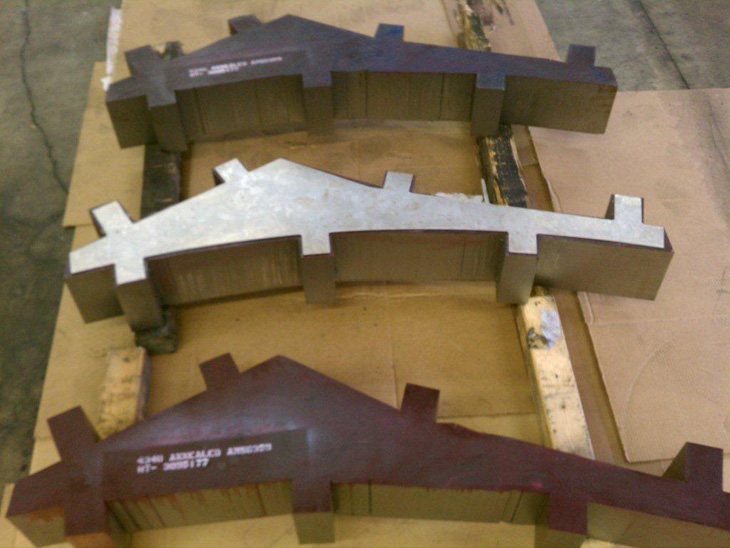
In 2026, specifying an alloy forge isn't just a manufacturing decision. It's a risk-control decision tied to fatigue life, defect tolerance, and on-time delivery for programs that can't absorb rework or schedule slip.
Supply chain reality is still shaping forging strategy. Major aerospace suppliers continue to flag castings and forgings as persistent bottlenecks, even as other categories improve.
When procurement teams can't validate process control, traceability, and inspection discipline end-to-end, the "forged" part becomes a variable instead of a safeguard.
This guide breaks down the proven alloy forging techniques for 2026 and the process control points where quality is won or lost. Explore the applications where forging is specified because alternative forms introduce unacceptable risk.
An alloy forge is selected because it changes the part’s structure, not just its geometry. Proper forging produces grain flow oriented to the part shape, improving resistance to impact and fatigue compared to alternatives where grain is cut or discontinuous.
For aerospace and defense buyers, the practical outcomes are clear:
The procurement implication is straightforward: the value of an alloy forge is realized only when the supplier can control deformation, heat treatment, and inspection to produce repeatable properties - not just a forged shape.
Once the structural benefits of forging are clear, the next decision is to select the technique that best aligns with the part's function, alloy behavior, and production demands.

Despite advances in additive and other manufacturing modes, forging remains the dominant method for high-stress, fatigue-critical parts. In mission-critical manufacturing, selecting the correct alloy forge technique is one of the most consequential decisions a procurement or engineering team makes.
It directly affects mechanical performance, yield consistency, and compliance alignment. Below are the core forging methods used, along with the trade-offs procurement and engineering must evaluate.
Open-die forging uses flat dies or simple contours to deform a billet into shape progressively. It does not entirely confine the workpiece, allowing for customized shapes and complex cross-sections.
Why it matters:
Performance & supply impact:
Common use cases:
Choose open-die when structural integrity across irregular cross-sections outweighs the need for tight dimensional tolerance.
Closed-die forging (also called impression-die forging) uses contoured dies that completely enclose the billet. Material flows into die cavities, producing near-net shapes with defined features.
Why it matters:
Performance & supply impact:
Common use cases:
Closed-die forging is chosen when the application demands both mechanical performance and defined dimensional tolerances across multiple pieces.
Near-net-shape forging produces parts very close to final geometry, substantially reducing machining stock and material removal.
Why it matters:
Performance & supply impact:
Common use cases:
Near-net-shape forging is chosen when minimizing internal machining time is a priority, especially for constrained production lines or short-cycle deliveries.
Selecting an alloy forging technique is not a matter of preference but a performance and supply requirement. Procurement teams must understand:
A supplier that offers multiple forging techniques under a single quality system significantly reduces risk compared to outsourcing individual steps to numerous vendors.
Not sure which forging technique best fits your alloy, geometry, or production volume? Aero-Vac supports both open-die and closed-die forging, helping engineering teams select the right approach before costly tooling or processing decisions are made.
In an alloy forge, the part's final risk profile is set long before machining. The highest-impact failure modes come from process drift: uncontrolled thermal windows, inconsistent deformation, and documentation gaps that prevent QA release.
AS9100D reinforces this by requiring controlled production conditions, verified process capability, and, as needed, traceability to assure conformity.
If the billet pedigree is wrong, everything downstream is reworked. Procurement and QA should expect:
For aerospace alloys, temperature control isn't a "best practice." It's the difference between repeatable properties and batch-to-batch variability. NASA's aerospace materials guidance is explicit: mechanical properties are strongly affected by processing and heat treatment, not just chemistry.
The forge step must deliver the intended deformation path (and not introduce laps, folds, or internal discontinuities). When strain, temperature, or flow is inconsistent, you don't just risk scrap; you risk late-stage nonconformance after value has already been added.
Heat treatment is where many forging programs either lock in performance or lose it. In aerospace supply chains, Nadcap-aligned heat-treating expectations are commonly used to enforce discipline. SAE's AS7102 defines minimum requirements for heat treat suppliers under the Nadcap accreditation framework.
Aerospace forgings are frequently inspected for internal quality using ultrasonic inspection, specifically because internal defects are unacceptable in load-bearing parts. This is where process control becomes provable: inspection results must map cleanly to the part's traceability record, not exist as disconnected paperwork.
The alloy forge process is only as strong as its control points. These process controls matter most in applications where variability is penalized and failure is not recoverable.
Let's see some ahead.
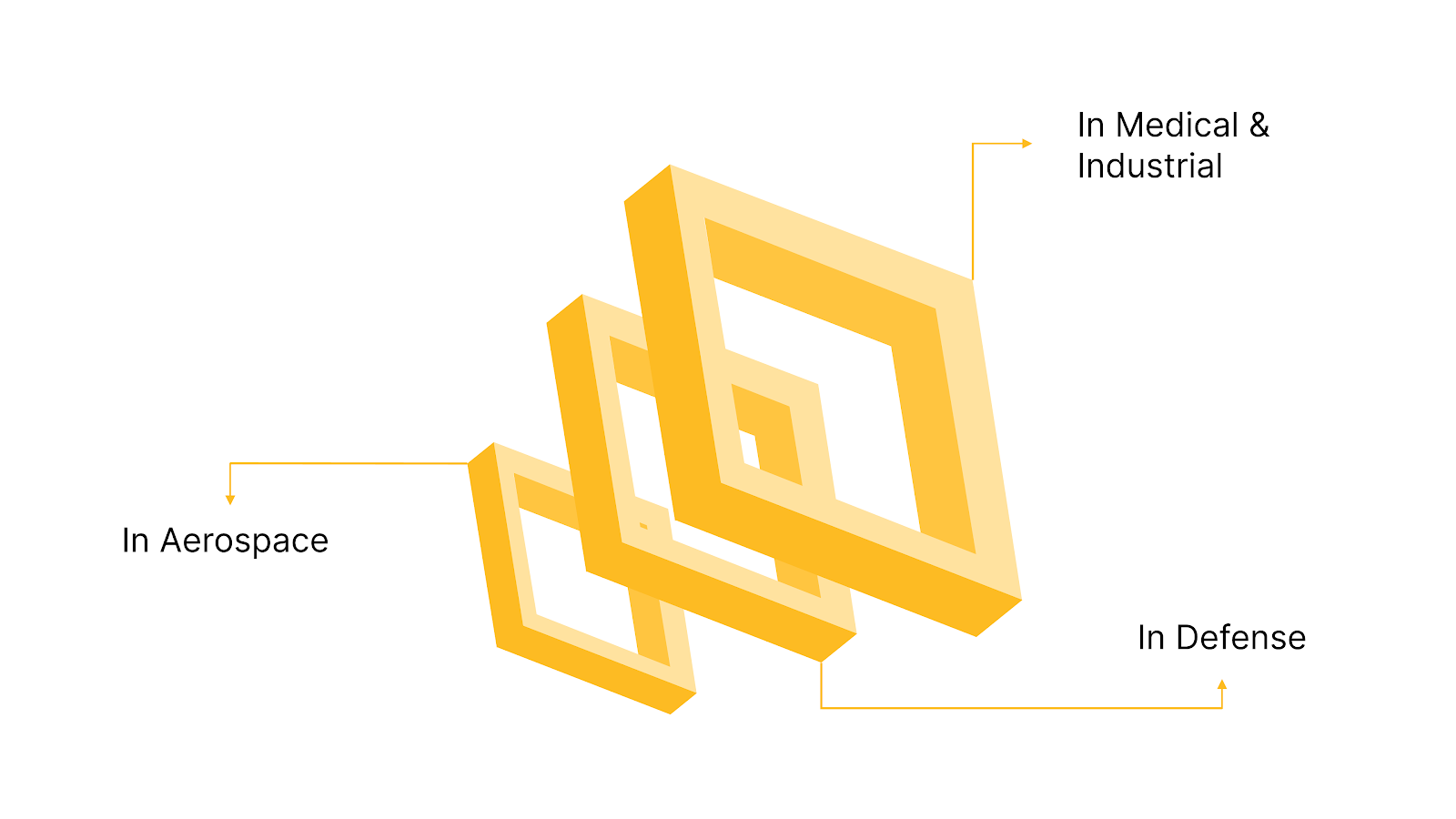
In 2026, an alloy forge will most often be specified for one reason: the application penalizes variability. Where impact loads, fatigue cycling, and defect tolerance define the risk profile, forging is used to lock in structural integrity and repeatable properties.
Aerospace applications continue to drive demand, as grain flow and defect resistance matter under cyclic stress. The Forging Industry Association notes that forging's grain structure, oriented to part shape, improves strength, ductility, and resistance to impact and fatigue compared with machined bar/plate.
That's why forged components are standard in landing gear load paths and engine/rotating parts where failure is not tolerated.
Defense programs rely on forgings that must withstand shock and thermal cycling while maintaining toughness and structural continuity. A 2024 Aubert & Duval defense brochure explicitly references steel grades designed for gun blanks and mortar barrel forgings, highlighting how alloy choice and forging route are tied to strength/toughness tradeoffs in service.
For procurement, this is the pattern: forged alloy selection is driven by mission loads, not convenience.
Medical and high-reliability industrial applications continue to specify forged titanium because of fatigue performance and material integrity requirements. Ti-6Al-4V (and ELI variants) remains widely used for orthopedic implants due to its strength and corrosion behavior in the body.
Published manufacturing literature also notes forging as a standard plastic working route for titanium implants, reflecting the need for controlled properties in long-life components.
Thus, alloy forge demand in 2026 will be driven by applications where the cost of uncertainty is highest. If the part lives in a fatigue load path, sees shock, or requires long-life reliability, forging is selected to reduce structural risk.
Given the performance and compliance stakes, supplier selection becomes a risk-screening exercise rather than a capacity check. Let's see how to evaluate one.
In 2026, qualifying an alloy forge partner is a risk-screening exercise, not a capability checklist. The right evaluation criteria help procurement, engineering, and QA teams predict delivery reliability, audit outcomes, and downstream manufacturing stability before issuing a PO.
Confirm that AS9100D / ISO 9001 certification covers material distribution and forging-related processes, not only machining. Many audit findings trace back to gaps between what's certified and what's actually controlled. A mismatch here increases the need for corrective actions and delays releases.
Require proof that traceability persists from source billet/heat → forging lot → heat treat → NDT/inspection. In aerospace receiving inspections, documentation gaps remain a top cause of parts placed on quality hold, even when dimensions pass.
Ask whether the supplier physically holds alloy inventory and maintains ownership through forging. Brokered sourcing increases lead-time variability and weakens control during expedites, especially problematic in volatile markets where alloy availability shifts weekly.
Evaluate how much of the forging flow is controlled internally or through tightly governed partners:
Each outsourced step adds queue time and raises the probability of document reconciliation delays.
Request evidence of on-time delivery performance during periods of constrained supply. OEM scorecards actively penalize sustained delivery below accepted thresholds; partners who manage inventory and first-step processing tend to perform more consistently.
The safest alloy forge partners are those who control material, processes, and documentation as one system, delivering predictable outcomes when markets and schedules are under pressure.
If these are non-negotiable for you, Aero-Vac offers a proven alloy forging model built around traceability, integration, and compliance. Speak with our team about qualifying Aero-Vac for your next program.
For aerospace and defense buyers, the lowest-risk alloy forge strategy eliminates uncertainty across material, processing, and delivery. This is where Aero-Vac Alloys & Forge fits operationally.
Rather than sourcing forgings through multiple sub-tier vendors, Aero-Vac supports alloy forging programs by controlling the material from the start. Holding forging-grade inventory internally aligns forging strategy, heat treatment, and downstream processing with the alloy's requirements rather than adapting them after the fact.
How this supports better forging outcomes:
For procurement and engineering teams, this model reduces a common failure mode in alloy forging programs: forging decisions made in isolation from material control and certification requirements.
In 2026, alloy forging delivers value only when it is executed as a controlled, certified, and supply-chain-aware process. For aerospace, defense, and other regulated industries, the primary risk is not whether a part can be forged, but whether the forging can be produced consistently, documented thoroughly, and delivered on schedule.
Aero-Vac supports the right approach by combining a deep inventory of aerospace-grade alloys with custom open-die and closed-die forging and in-house value-added processing. It's delivered under an AS9100D/ISO 9001-certified quality system.
Ready to reduce risk in your next forging program? Request a certified alloy forging quote, verify material availability, or consult with Aero-Vac's technical team to align your forging requirements with performance, compliance, and delivery expectations.
1. How do OEMs typically qualify a new alloy forge supplier?
OEMs usually require AS9100D certification, sample documentation packages, and a successful First Article Inspection (FAI). Past delivery performance and traceability depth are often reviewed before full approval.
2. Can alloy forging support prototype or low-volume programs?
Yes, mainly through open-die or near-net-shape forging. These methods allow flexibility without high tooling investment, making them suitable for development programs and early production runs.
3. What causes forged parts to fail QA even when dimensions are correct?
Most failures stem from documentation gaps, heat-treat deviations, or incomplete traceability. QA release depends on process evidence, not just dimensional compliance.
4. How early should forging suppliers be involved in part design?
Ideally, during early design or material selection. Early involvement helps optimize geometry for grain flow, reduce machining stock, and avoid later redesigns or processing constraints.
5. Are forged alloy lead times expected to improve in 2026?
Incremental improvements are expected, but constraints remain for high-demand alloys. Suppliers with controlled inventory and integrated processing are best positioned to offer reliable timelines.