Schedule a Call
Ready to Upgrade Your Process Operations?
Ready to Upgrade Your Process Operations?
Unlock insights on aircraft alloys for enhanced aerospace engineering. Discover strength, types, and applications. Click to explore now.

For Procurement Managers and Manufacturing Engineers in aerospace and defense, selecting the right aircraft alloy is a mission-critical decision. A single material failure can compromise an entire system, which is why alloy choice must account for both performance requirements and the supplier’s ability to provide certified, traceable, and consistently processed stock.
This article highlights the key properties and practical applications of the three major aircraft alloy families: Titanium, Nickel-based Superalloys, and High-Strength Steel.
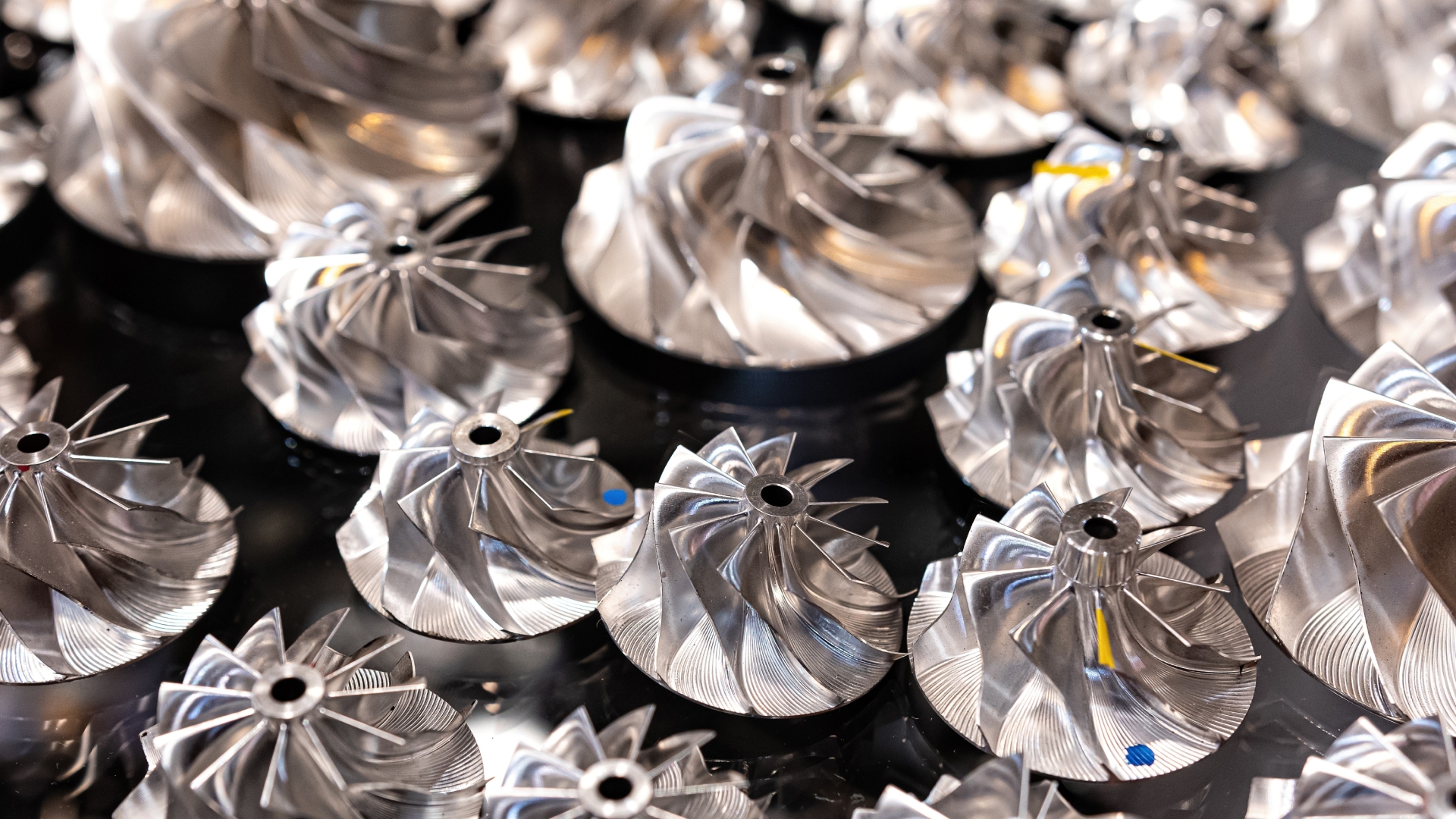
Every alloy used in a mission-critical application, from the fuselage structure to the hottest sections of a turbine engine, is selected based on a demanding set of mechanical and thermal criteria.
Titanium alloys are fundamental to aerospace design due to their unparalleled strength-to-weight ratio and superior corrosion resistance. The most common grade, Ti 6Al-4V (AMS 4911, AMS 4928), dominates airframes, fasteners, and engine fan sections.
Aero-Vac provides Ti 6Al-4V and other crucial Titanium Alloys in Bar, Plate, and Forgings, cut to size and delivered with guaranteed MTR traceability. You can view our available Titanium forms here.
For turbine blades, combustors, and exhaust components, the aircraft alloy must withstand extreme temperatures, often approaching 1000°C (1832°F), without exhibiting creep (plastic deformation under stress at high temperature). This domain is defined by Nickel-based superalloys like Inconel 718 (AMS 5662) and Waspaloy.
Hot Isostatic Pressing (HIP), followed by specialized aging heat treatment, is often required to achieve the final mechanical properties necessary for turbine disc applications.
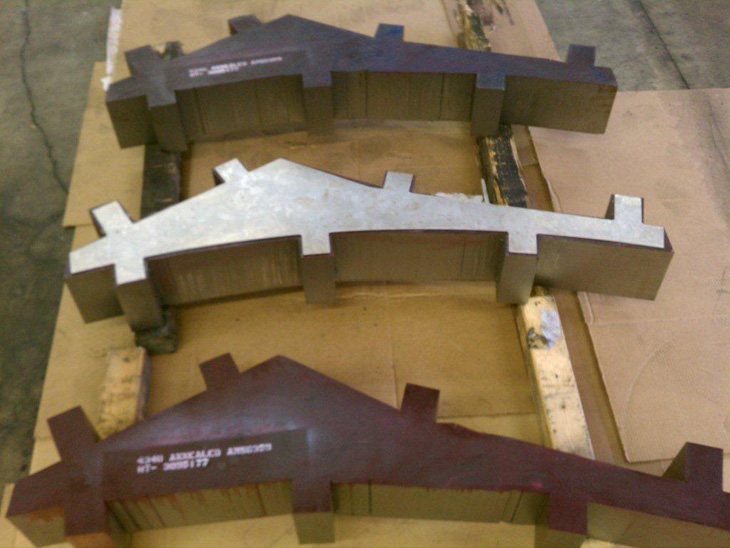
Specialty alloy steels and corrosion-resistant steels (CRES) are selected where extremely high strength, wear resistance, and relative cost-effectiveness are needed, such as in landing gear components and structural fasteners.
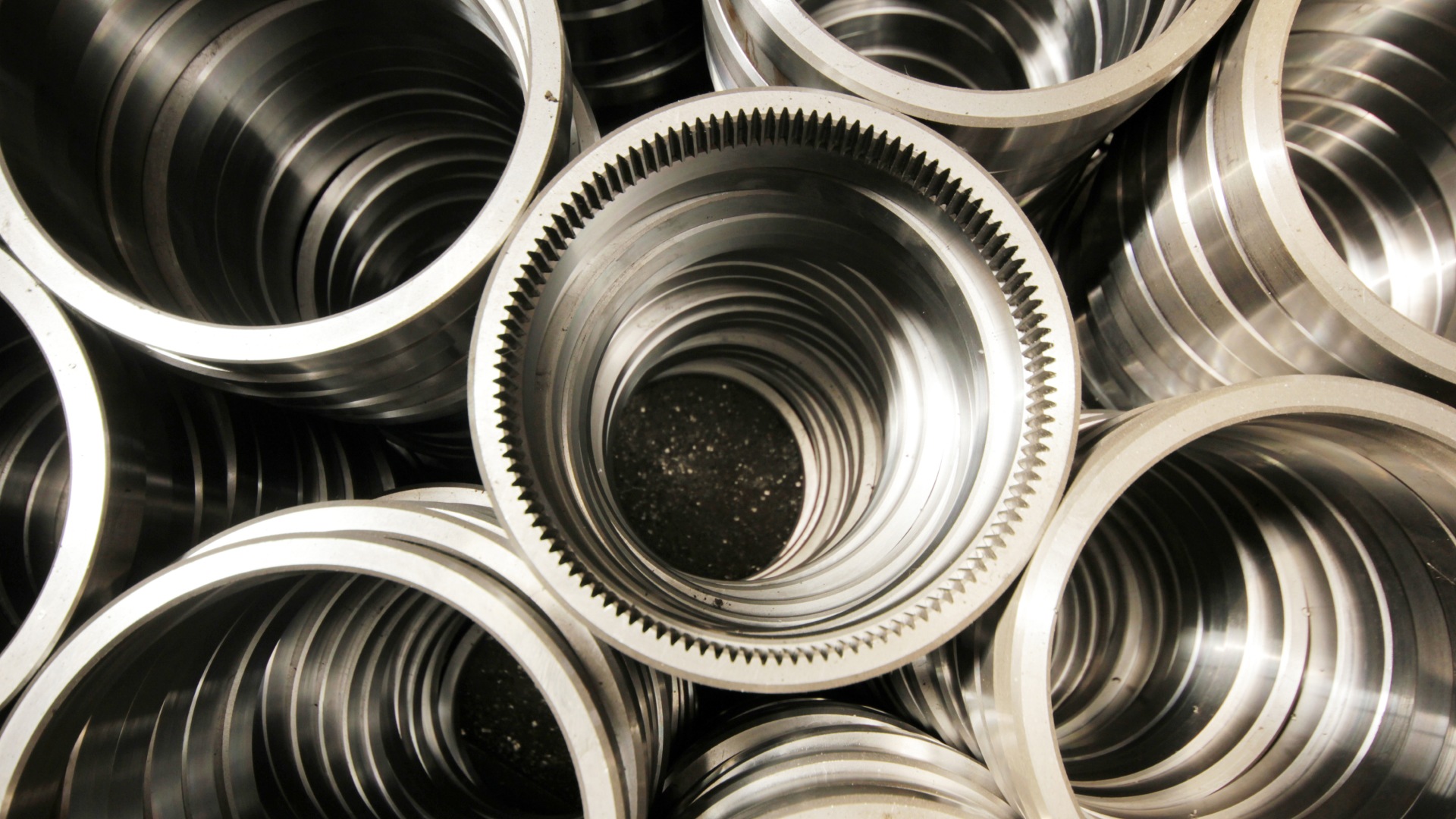
The critical challenge for Procurement Managers is not locating an aircraft alloy; it is securing a reliable supply of certified, processed, and defect-free material that arrives precisely on time. Aero-Vac Alloys & Forge's value proposition is built entirely on solving this supply chain risk.
In mission-critical industries, QA Managers must have absolute confidence in the material's origin and compliance.
Furthermore, controlled heat treating ensures the material is delivered in the precise metallurgical condition required by the customer's design, reducing the risk of failure later in the manufacturing process.
Waiting 8-12 weeks for a custom forging or having to coordinate separate vendors for material, cutting, and forging introduces unnecessary lead time and logistical complexity.
This delivers a component in the near-net-shape, directly addressing the total Cost-in-Use by minimizing the customer's internal machining time, tool wear, and scrap rate on expensive aircraft alloy stock.
The selection and procurement of aircraft alloy materials represent the first critical step in a chain where failure is not an option. For Procurement Managers and Manufacturing Engineers, securing the right material is only half the battle; ensuring certified quality, full traceability, and efficient processing are the true differentiators.
By partnering with Aero-Vac Alloys & Forge, you leverage a certified global supply chain that specializes in risk mitigation and the rapid delivery of complex, near-net-shape specialty metal components.
We guarantee the quality and speed necessary to keep your mission-critical production on schedule and compliant.
Stop waiting 12 weeks. Verify Next-Day Availability for your critical aircraft alloy stock size today.
Ready to secure a reliable source and simplify your supply chain? Consult with our technical team to discuss your custom open die forging or near-net-shape machining requirements.
1. What is the most critical mechanical property for a structural aircraft alloy?
Fatigue resistance is the most critical mechanical property. Aircraft components, particularly wings, airframes, and landing gear, are subjected to millions of stress cycles. The alloy must be able to withstand these repetitive loads without premature crack initiation or propagation.
2. How does the AS 9100D certification benefit a Procurement Manager?
The AS 9100D certification guarantees a robust Quality Management System. For a Procurement Manager, it translates directly into reduced supply chain risk, as it assures that the material supplied is fully compliant, properly documented, traceable to the MTR, and manufactured under controlled, audited processes.
3. What does "near-net-shape" delivery mean, and why is it important?
Near-net-shape delivery means the material (e.g., a forging or a cut bar) is processed by the supplier to be very close to the final required dimensions. This is important because it reduces the customer's internal machine time, labor, and scrap waste on expensive aircraft alloy stock, directly lowering the total cost-in-use.
4. Why is Vacuum-Arc Remelting (VAR) important for high-strength steel alloys?
The VAR process involves re-melting the alloy in a vacuum. This process significantly reduces the content of non-metallic inclusions and undesirable gases (like Oxygen and Nitrogen), which are points of weakness. For alloys like 4340 VAR, this improves overall material homogeneity, toughness, and fatigue life.
5. How does Aero-Vac expedite lead times for custom forgings?
Aero-Vac reduces lead times by operating as a manufacturing distributor that stocks its own extensive inventory of specialty billets. This eliminates the 8–12 week delay associated with ordering raw material from a mill, allowing the in-house open die forging and processing to begin almost immediately.
6. What are AMS and BMS standards, and why do they matter for aircraft alloy procurement?
AMS (Aerospace Material Specification) and BMS (Boeing Material Specification) are industry and OEM standards that dictate the precise chemical composition, mechanical properties, and manufacturing/testing requirements for materials. Adherence to these standards, proven by the MTR, is the basis of material acceptance and regulatory compliance.