Schedule a Call
Ready to Upgrade Your Process Operations?
Ready to Upgrade Your Process Operations?
Learn how pH effects stainless steel corrosion, and explore ways to manage risks with passivation and material selection for critical industries.
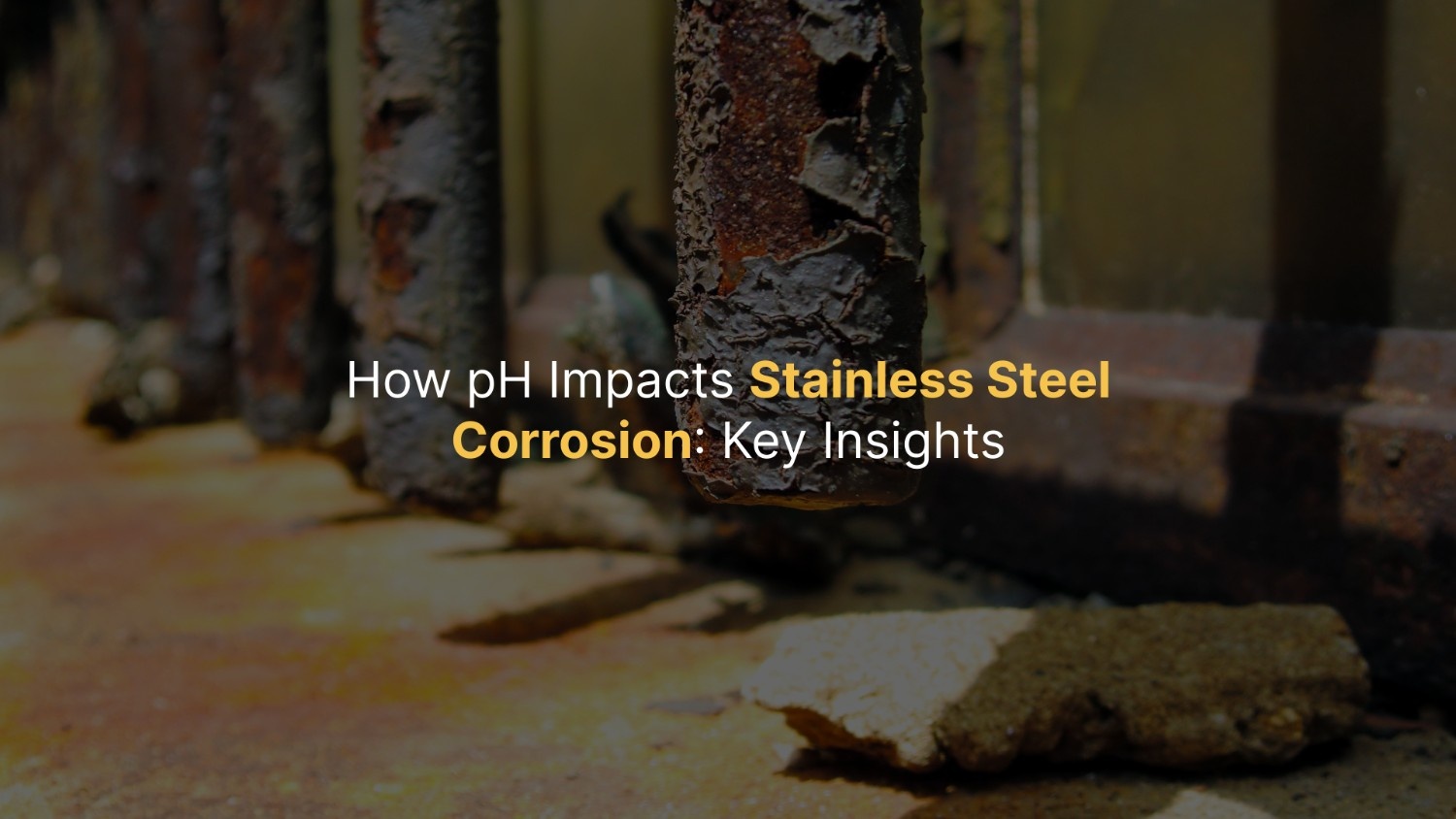
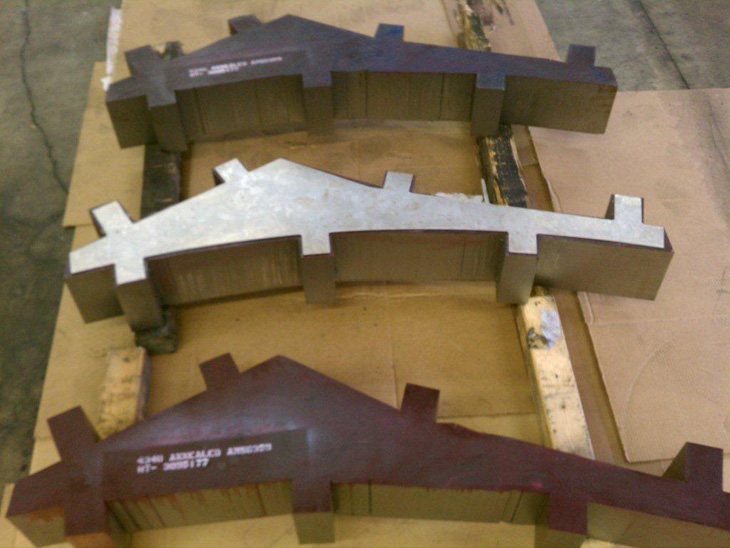
Unexpected corrosion, component degradation, and unplanned shutdowns are real risks when pH-related corrosion in stainless steel is overlooked.
In high-reliability industries such as aerospace, medical, and advanced manufacturing, these issues can quickly escalate into project delays, compliance challenges, and safety concerns.
These risks are often intensified by operating in unsuitable pH conditions, a factor that is frequently underestimated during material selection and system design. As corrosion fastens under such conditions, the service life of stainless steel components gets significantly reduced.
In this blog, you’ll explore how pH levels influence the corrosion behavior of stainless steel and learn practical ways to reduce risk, helping ensure long-term reliability and consistent performance in critical applications.
pH levels directly influence stainless steel corrosion, effecting its durability and service life. It is especially common in high-reliability industries such as aerospace, defense, and medical manufacturing. Here’s how pH levels effect corrosion in stainless steel:
In acidic conditions, stainless steel corrodes more quickly as its protective oxide layer starts to break down.
Once this layer is compromised, the metal becomes vulnerable to pitting, crevice corrosion, and, in severe cases, stress corrosion cracking. Lower pH levels generally lead to faster and more aggressive corrosion.
Stainless steel usually performs better in alkaline environments, but stress corrosion cracking can still occur. When high pH levels are combined with tensile stress, cracks may form, weakening the material over time.
Understanding how pH levels influence corrosion helps explain why different stainless steel grades react differently under varying conditions.
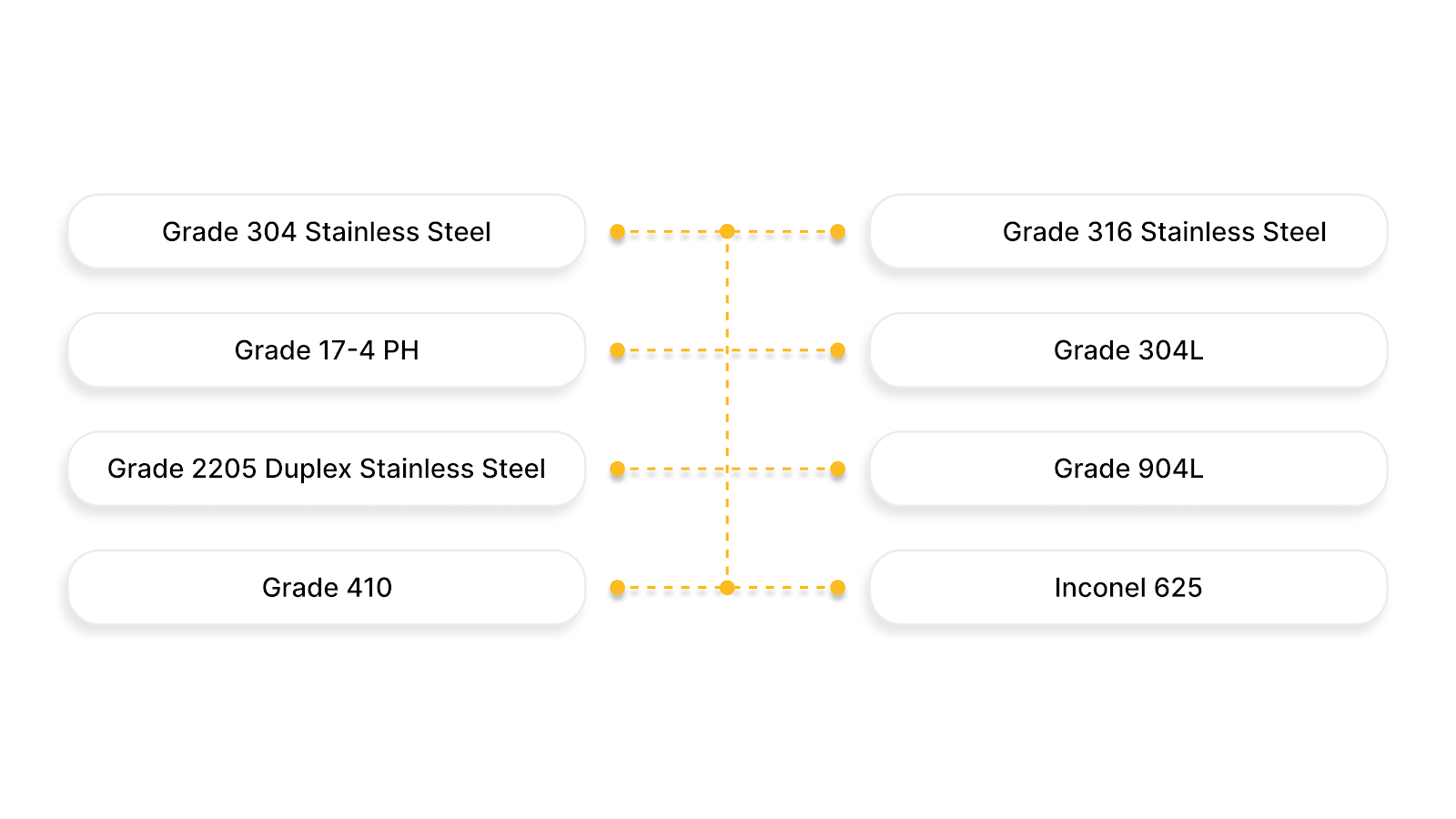
The corrosion resistance of stainless steel depends heavily on its alloy composition, and changes in pH can significantly effect its performance in service.
Understanding how different stainless steel grades respond to acidic and alkaline environments helps reduce risk and supports better material decisions in mission-critical applications.
304 stainless steel is popularly used for its versatility, but it performs poorly in highly acidic environments (pH < 5). The absence of molybdenum makes it more prone to pitting and crevice corrosion under acidic exposure.
Recommendation: For acidic conditions, consider upgrading to 316 stainless steel or applying protective surface treatments.
316 stainless steel contains molybdenum, which significantly improves resistance to pitting and crevice corrosion in acidic environments. It performs reliably in mildly acidic to neutral conditions.
Recommendation: Choose 316 stainless steel for applications involving acidic exposure, including medical sterilization and marine environments.
17-4 PH offers high strength and good corrosion resistance in neutral and mildly alkaline conditions. However, it is not intended for aggressive acidic or strongly alkaline exposure.
Recommendation: Use 17-4 PH for high-stress aerospace and defense components operating in stable pH environments.
With lower carbon content, 304L reduces the risk of sensitization during welding and performs better than 304 in mildly alkaline and neutral environments.
Recommendation: Select 304L for applications involving frequent cleaning with mildly alkaline agents.
2205 Duplex stainless steel combines strength with excellent resistance to stress-corrosion cracking and general corrosion in mildly acidic to mildly alkaline environments.
Recommendation: Consider 2205 Duplex for applications exposed to both acidic and alkaline conditions, especially in chemical or oil-and-gas operations.
904L stainless steel offers exceptional resistance to pitting, crevice corrosion, and stress corrosion cracking in very low-pH environments due to its high nickel and molybdenum content.
Recommendation: Use 904L when continuous exposure to strong acids is unavoidable.
410 stainless steel provides high strength but only moderate corrosion resistance, making it vulnerable to pitting in both acidic and alkaline environments.
Recommendation: Limit 410 stainless steel to applications with minimal exposure to aggressive pH conditions.
Inconel 625 offers outstanding resistance to both highly acidic and highly alkaline environments. Its corrosion resistance and high-temperature strength allow it to perform in the harshest conditions.
Recommendation: Choose Inconel 625 when both extreme corrosion resistance and high-temperature performance are required.
Having trouble sourcing stainless steel that meets your project’s highest standards? Aero-Vac supplies fully certified, traceable specialty metals, giving you confidence that every piece performs as expected.
With a broad inventory and fast turnaround, Aero-Vac supports aerospace, defense, and medical teams with materials built for precision, reliability, and the most demanding applications.
Seeing how stainless steel grades respond to pH changes makes it clear why passivation plays a key role in protecting them from corrosion.
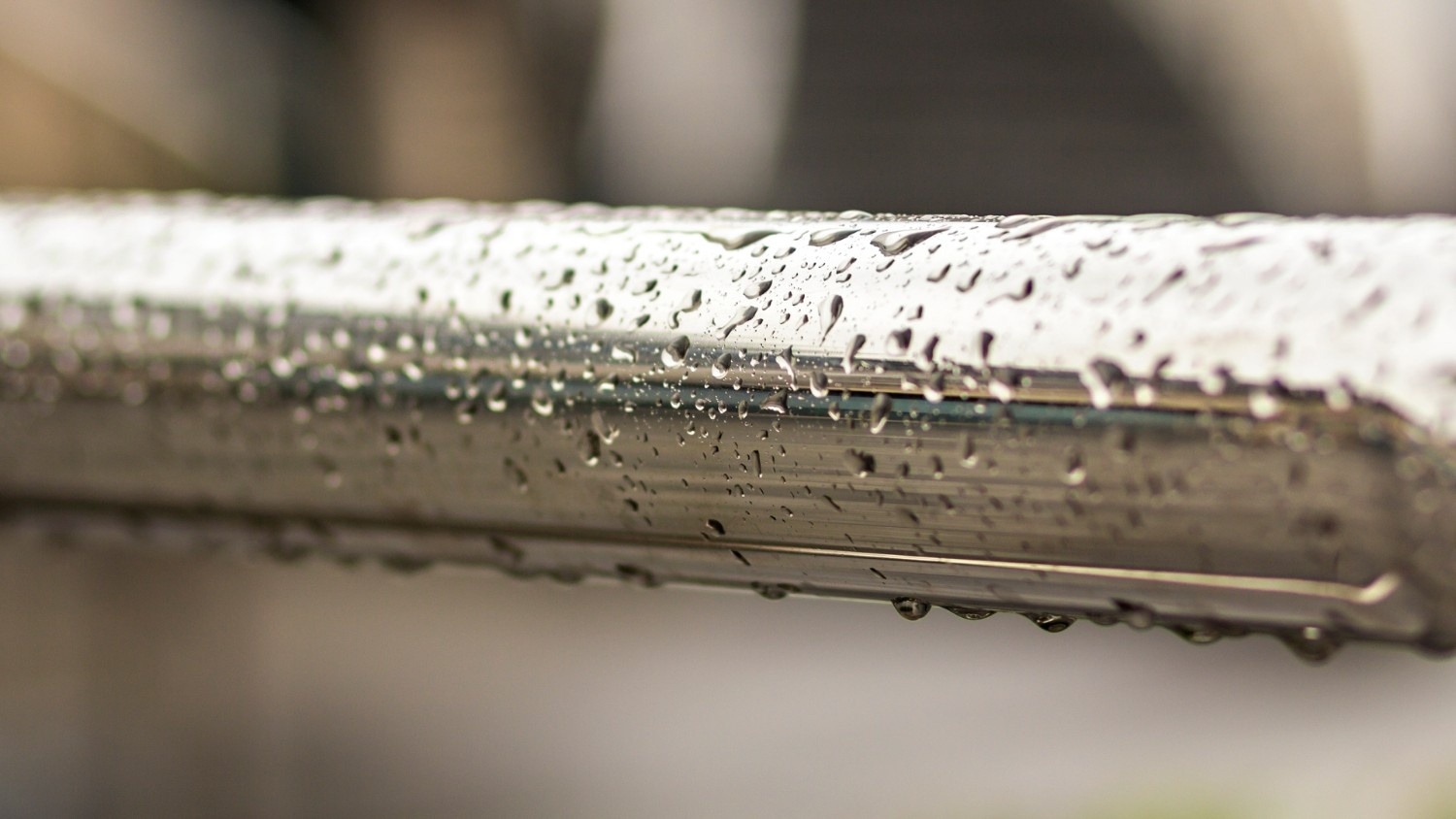
Passivation is crucial in improving the corrosion resistance of stainless steel, especially in applications where material integrity is critical.
By strengthening the protective oxide layer, passivation helps stainless steel perform reliably in harsh environments and extends the service life of corrosion-prone components.
Below are six ways passivation helps protect stainless steel from corrosion.
Passivation improves the natural oxide layer, creating a uniform, durable surface that shields steel from moisture, oxygen, and chemicals.
Example: Aerospace fuel systems and exhaust components rely on this layer to extend service life and reduce maintenance.
Passivation improves resistance to localized and chloride-induced corrosion, vital in marine or chemical environments.
Example: In medical devices like surgical instruments, passivated stainless steel better withstands acidic sterilization solutions, helping maintain surface integrity over repeated use cycles.
Passivation strengthens stainless steel against chemicals, corrosive fluids, and extreme temperatures, maintaining stability over time.
Example: Pipes and valves in chemical or oil & gas plants perform reliably even under prolonged exposure to aggressive media.
Passivation ensures consistent corrosion resistance, even in tight corners, internal passages, or intricate geometries.
Example: Aerospace landing gear assemblies stay protected across complex shapes, preventing localized failures.
Passivation helps stainless steel meet standards like AMS, MIL-STD, and ISO 9001, supporting traceability, cleanliness, and corrosion resistance.
Example: Surgical instruments and implants undergo passivation to comply with FDA and ISO requirements, ensuring safety and biocompatibility.
By improving corrosion resistance, passivation prolongs component life and lowers the need for frequent repairs or replacements.
Example: Aerospace and defense equipment benefit from reduced inspection and maintenance costs over time.
Understanding how passivation shields stainless steel makes it easier to effectively address and manage pH-related corrosion risks.
The corrosion of stainless steel and other alloys caused by fluctuating pH levels can disrupt operations, compromise material integrity, and delay project timelines.
By understanding the environmental conditions and taking targeted protective measures, your team can minimize these risks and maintain reliable performance. Here’s how to do this:
Once you know how to manage pH-related corrosion, it shows the importance of working with a trusted supplier like Aero-Vac for high-quality stainless steel solutions.
Aero-Vac supplies specialty metals and custom forgings for industries where material quality and reliability are critical.
With a strong focus on supply chain risk management, Aero-Vac delivers certified, fully traceable materials that meet established industry standards.
What Aero-Vac Offers:
Aero-Vac’s emphasis on quality control and delivery reliability supports stainless steel sourcing needs across demanding industries.
Explore Aero-Vac’s Forging-Grade Alloys and Metals to see how they align with a wide range of project requirements.
Controlling pH-related corrosion in stainless steel starts with selecting the right alloy. It should be combined with monitoring and protective treatments, such as passivation, to maintain material integrity in demanding environments.
Aero-Vac provides certified, high-performance stainless steel alloys with fast turnaround and dependable quality. Our wide inventory and custom forging services ensure you have the materials you need, precisely when you need them.
Need reliable stainless steel solutions? Contact us for a custom quote or explore Aero-Vac’s premium alloys today.
Q1. How does pH effect the performance of stainless steel in high-temperature environments?
A1. In high-temperature conditions, pH extremes can weaken the protective oxide layer on stainless steel, increasing the risk of corrosion. When heat is combined with acidic or highly alkaline environments, material degradation occurs faster.
Q2. Can passivation improve the fatigue resistance of stainless steel?
A2. Yes, passivation improves corrosion resistance by strengthening the oxide layer on stainless steel. While it does not directly change mechanical strength, limiting corrosion helps reduce crack formation over time.
Q3. Are there pH conditions where stainless steel alloys perform better than other metals?
A3. Stainless steel alloys, especially molybdenum-rich grades like 316, perform well in acidic and mildly alkaline environments. Their resistance to pitting and crevice corrosion makes them a dependable choice for chemical processing and marine applications.
Q4. How does pH-induced corrosion effect the long-term performance of medical implants?
A4. pH-related corrosion can gradually damage implant surfaces and reduce material strength over time. Using corrosion-resistant materials such as 316L stainless steel or titanium, along with proper passivation, helps maintain durability and biocompatibility.
Q5. What environmental factors, besides pH, influence stainless steel corrosion?
A5. Factors such as temperature, humidity, and exposure to chlorides, such as seawater or cleaning agents, can increase corrosion. Controlling these conditions through proper material selection and maintenance helps reduce long-term performance risks.