Schedule a Call
Ready to Upgrade Your Process Operations?
Ready to Upgrade Your Process Operations?
This bespoke metal fabrication guide explains how aerospace & defense buyers reduce risk, cut lead times, and ensure quality through traceable specialty alloys.

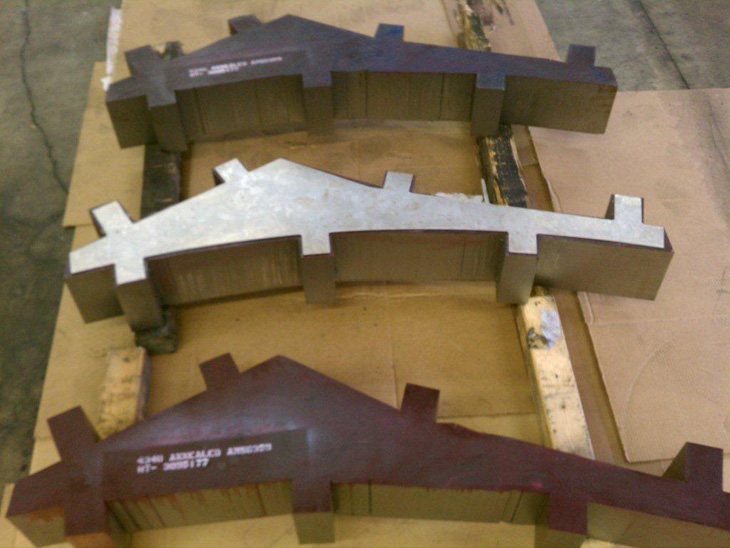
For aerospace and defense manufacturers, bespoke metal fabrication is no longer a design convenience. It has become a supply chain risk factor with strategic consequences.
Nearly 64% of aerospace companies report ongoing supply chain disruptions, driven by extended lead times, limited raw material availability, and fragmented supplier performance. And that's despite improvements in inventory management and planning.
Procurement managers and manufacturing engineers in mission-critical sectors don't ask “What is bespoke metal fabrication?" They ask:
This guide answers those questions with technical insight, risk-focused analysis, and procurement-oriented evaluation criteria. Understand how bespoke metal fabrication must function in regulated industries where certification, delivery performance, and supply chain resilience are table stakes.
In mission-critical manufacturing, bespoke metal fabrication carries precise technical and compliance expectations, not generic "custom machining." It denotes a controlled process in which material selection, certified traceability, and documented processing sequences are aligned with regulatory needs and performance requirements.
For aerospace and defense buyers, this means three non-negotiable elements must coexist:
Bespoke fabrication must occur within a quality management system that meets AS9100D (built on ISO 9001 with aerospace-specific controls). This standard is widely required by OEMs and Tiers 1–3 to prevent defects, reduce process variation, and ensure audit readiness.
Every batch must be documented to its original mill test reports, including heat lot, manufacturer, and exact chemistry. This level of traceability is essential for regulatory conformity and safety assurance, not an optional archive.
Bespoke fabrication includes a defined sequence of cutting, forging, machining, heat treating, and inspection, with every step logged and accountable. In aerospace manufacturing, this control is vital because loose process chains correlate with higher defect rates and rework.
Even when bespoke fabrication is specified correctly, many programs fail to execute due to weaknesses in the supply chain's structure. Let's see that ahead.
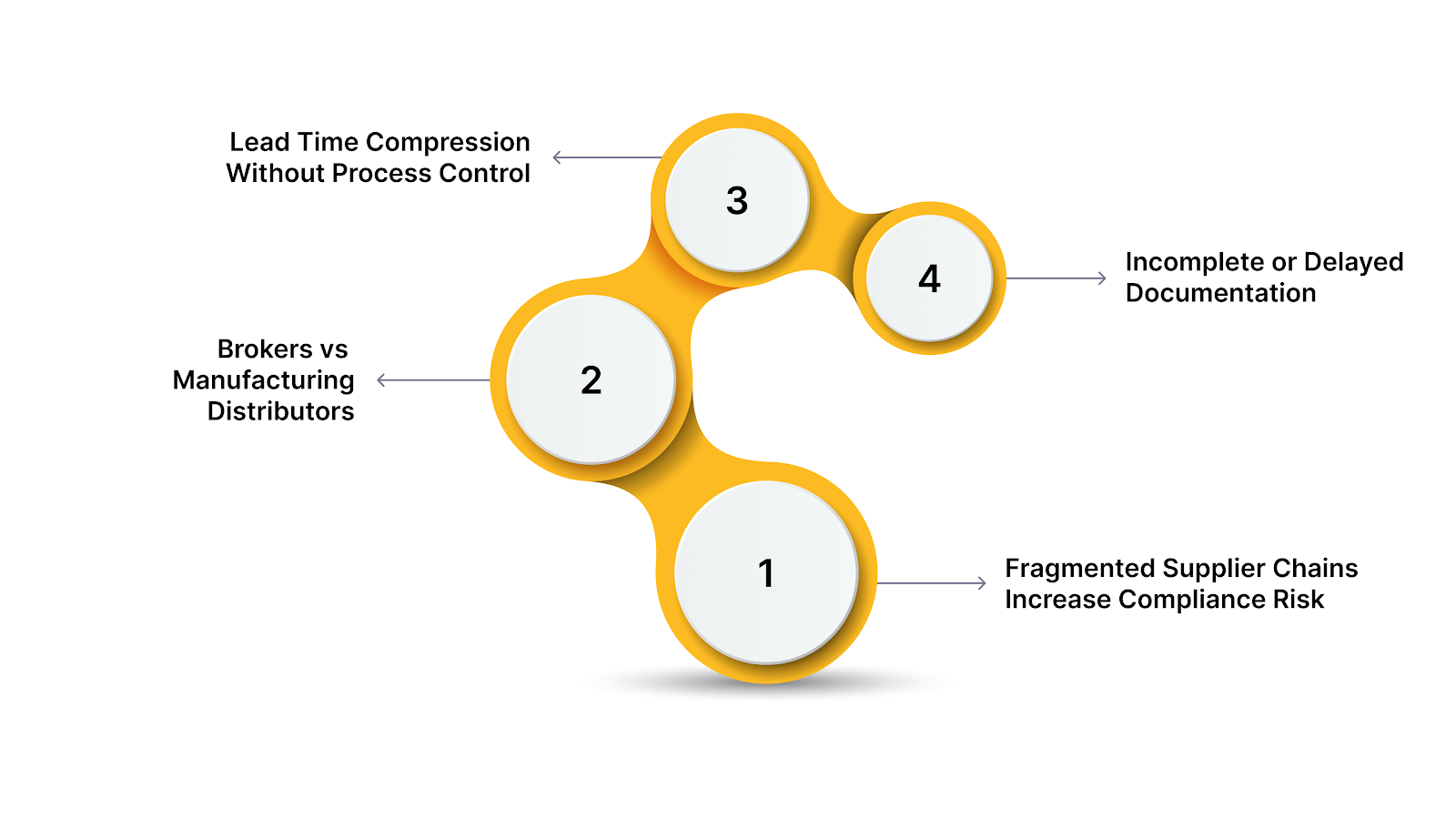
Most bespoke metal fabrication failures do not originate on the shop floor. They originate in how the supply chain is structured and controlled. In regulated industries, these failure points often remain invisible until they trigger schedule delays, QA findings, or supplier disqualification.
A standard failure mode is the separation of material supply, fabrication, heat treatment, and inspection across multiple vendors. Each handoff introduces:
For procurement teams, fragmented chains slow root-cause analysis and complicate audit preparation, especially when documentation must be pulled from multiple third parties.
Another critical failure point is reliance on material brokers rather than manufacturing distributors. Brokers typically do not:
This lack of control is a known contributor to late-stage non-conformances. In bespoke fabrication, control over the billet is control over the outcome.
Many suppliers attempt to shorten lead times by accelerating machining or outsourcing processing under time pressure. Without integrated quality systems, this approach increases risk rather than reducing it.
Schedule-driven outsourcing can be a leading contributor to rework and missed first-article approvals, particularly for nickel-based alloys and titanium components. Speed without process ownership results in unpredictable outcomes.
In regulated environments, a component is not complete until its documentation is complete. Delayed Mill Test Reports, missing heat-treatment records, or unsigned inspection reports routinely stop parts at receiving inspection.
So, bespoke metal fabrication fails mostly because these factors are treated as separate responsibilities. In mission-critical supply chains, that separation is the risk.
Struggling with fragmented suppliers and documentation gaps? Aero-Vac consolidates material supply and first-step processing under a single AS9100-certified system, reducing handoffs, delays, and compliance risk. Discuss your current supply chain challenges with our technical team.
In bespoke metal fabrication for aerospace and defense, geometry is rarely the primary risk. Material pedigree In regulated supply chains, alloys are procured and released in accordance with specifications, not marketing-grade labels.
Your fabrication plan must start with material that meets the governing specification and condition requirements before a chip is ever cut.
Additionally, melt practice and cleanliness directly affect the risk of defects. For mission-critical parts, buyers often specify vacuum-melted or remelted material routes because cleanliness and inclusion control directly influence fatigue performance and defect rates.
Now, once material pedigree is secured, the next challenge becomes speed without sacrificing compliance or documentation integrity.
In aerospace and defense manufacturing, the pressure to compress lead times is real: specialty alloy lead times have effectively doubled from roughly 12 weeks to as much as 24 weeks over recent years, driven by mill consolidation, material shortages, and tighter traceability expectations.
Yet accelerating delivery should never come at the expense of compliance or documentation integrity. For procurement managers and QA teams, the key question is not just "How fast can we get parts?" but "Can we get them on time with full certification and audit readiness?"
Compressed delivery windows are meaningless if materials arrive without Mill Test Reports (MTRs), heat histories, and evidence of process compliance. In aerospace and defense fabrication, these documents are mandatory for:
A First Article Inspection, a formal process verifying that initial production meets all specified engineering requirements, cannot be completed without traceable certifications for each fabrication step.
Supply chain disruptions continue to affect production rates across the sector. Airbus has publicly warned that aircraft delivery delays may persist for years due to ongoing bottlenecks in parts and materials sourcing, even as production targets increase.
These performance metrics underscore that expedited schedules are valuable only when they align with certified, traceable quality. Otherwise, they compound risk rather than reduce it.
Compressed bespoke metal fabrication timelines can be achieved without introducing documentation risk when:
This integration eliminates the delays typical of fragmented chains, where "fast" delivery is often offset by audits, document reconciliation, or rework cycles.
Facing compressed timelines without room for certification errors? Aero-Vac supports expedited bespoke metal fabrication through controlled inventory and in-house processing, delivering faster turnaround without compromising traceability. Verify current stock availability or expedited lead times today.
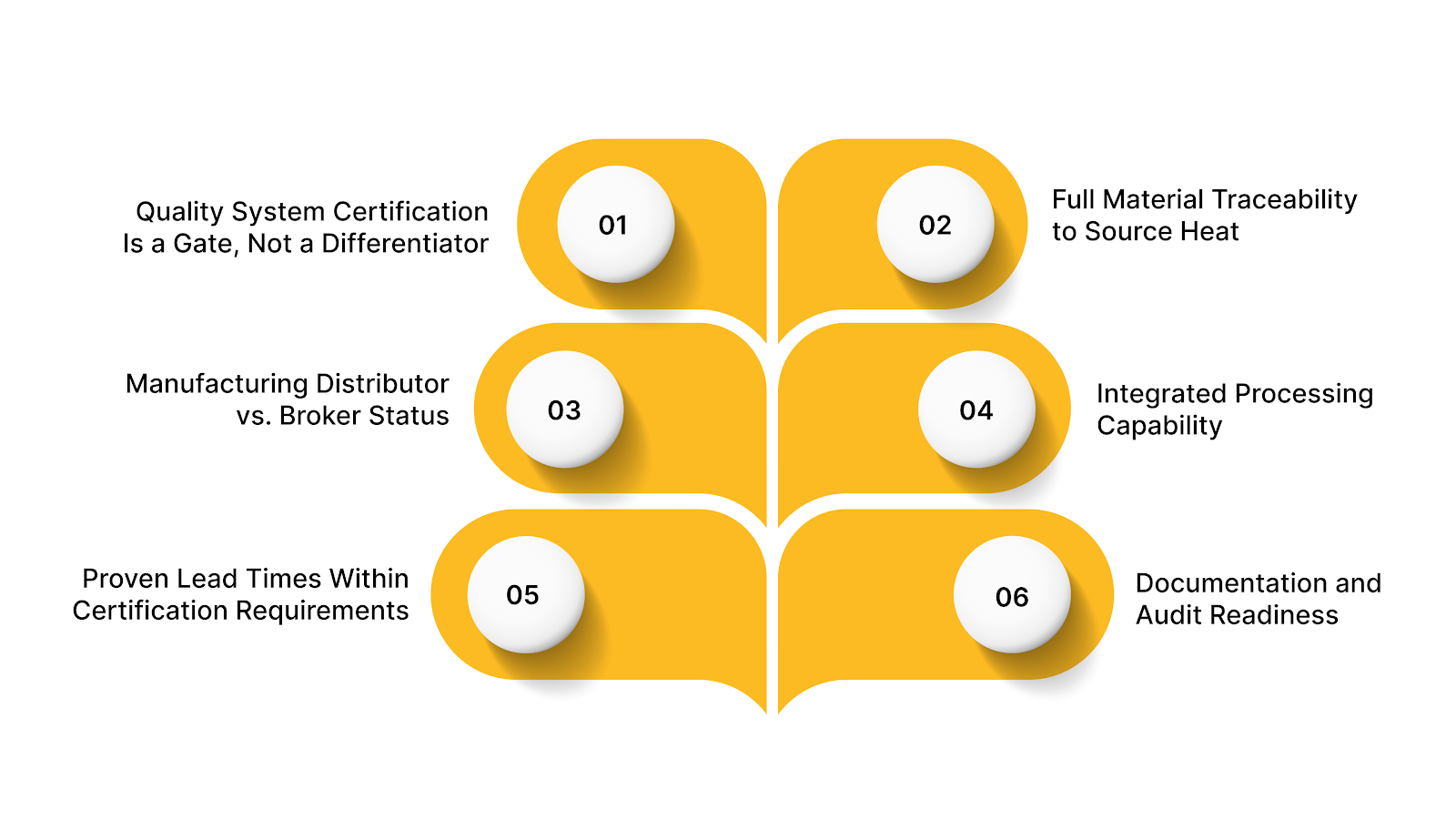
When bespoke metal fabrication is tied to aerospace, defense, or other regulated programs, supplier selection is a risk-filtering exercise, not a price comparison. The following checklist reflects what procurement, engineering, and QA teams actually need to verify before approving a fabrication partner.
Before technical discussions begin, confirm:
Suppliers operating outside aerospace-specific QMS frameworks account for a disproportionate share of non-conformances and corrective actions. Certification is the baseline for risk containment.
Procurement should require confirmation on the following aspects:
In aerospace receiving inspections, documentation gaps can cause parts to be placed on quality hold, delaying production even when the geometry is correct.
This distinction directly affects delivery reliability. Verify whether the supplier:
Suppliers that broker material without inventory control introduce additional variability in lead time and traceability risk, especially for expedited orders.
Evaluate how much of the fabrication process is controlled internally:
Each outsourced step adds queue time and increases the probability of documentation or scheduling delays. Integrated processing consistently reduces total lead time and simplifies supplier oversight.
Ask for clarity on:
In aerospace supply chains, delivery performance below accepted thresholds quickly impacts supplier scorecards and long-term approval status.
A qualified bespoke fabrication partner should be able to:
This capability protects both procurement and QA teams during OEM audits and program reviews.
For procurement teams, this checklist functions as a safeguard against late-stage failures that disrupt schedules, trigger corrective actions, or jeopardize approved supplier status.

For aerospace and defense buyers, the safest bespoke metal fabrication strategy is one that eliminates uncertainty across material, processing, and delivery. This is where Aero-Vac Alloys & Forge fits operationally, not rhetorically.
Aero-Vac operates as a manufacturing distributor, not a broker. That distinction matters. It means direct control over inventory, processing routes, and documentation from receipt through shipment, reducing the failure points outlined earlier.
What this looks like in practice:
From a procurement and QA standpoint, this integration simplifies supplier qualification, shortens approval cycles, and ensures every order is delivered with full traceability to original mill test reports.
Bespoke metal fabrication delivers value only when executed as a controlled, certified, and integrated process. For aerospace, defense, and other regulated manufacturers, the risk is not in customization itself, but in fragmented supply chains, uncertified materials, and processing steps that fall outside auditable quality systems.
Aero-Vac supports this model by combining a deep inventory of aerospace-grade alloys with in-house value-added processing. The result is a simplified supply chain and predictable outcomes for programs where failure, delay, or non-conformance is not acceptable.
Stop absorbing risk from fragmented fabrication chains. Request a certified quote for your next bespoke metal fabrication requirement and secure a faster, fully traceable path.
1. How does heat treatment sequencing impact aerospace-grade bespoke fabrications?
Heat treatment sequencing directly affects fatigue life, residual stress, and dimensional stability. Performing rough machining before final heat treatment often improves tolerance control and reduces distortion in nickel alloys and titanium components.
2. Can bespoke metal fabrication support urgent aerospace or defense programs?
Yes, but only when the supplier controls both inventory and processing internally. Expedited fabrication without material ownership or certified documentation often creates downstream delays during QA review or First Article Inspection.
3. How do alloy melt practices affect machinability in bespoke fabrication?
Vacuum-melted and remelted alloys (VAR/ESR) generally exhibit improved cleanliness and microstructural uniformity, which stabilizes cutting forces and tool wear. This reduces variability during machining of high-strength aerospace alloys.
4. What causes dimensional instability in bespoke forged components after machining?
Dimensional instability is often caused by residual stresses from forging or improper stress-relief cycles. Controlled forging practices and intermediate stress relief are critical to prevent post-machining distortion in tight-tolerance aerospace parts.
5. Is bespoke metal fabrication cost-effective for low-volume or prototype runs?
Yes, when near-net-shape fabrication and value-added processing reduce machining time, scrap risk, and internal labor. For high-value alloys, total cost-in-use often matters more than unit price, even at low volumes.